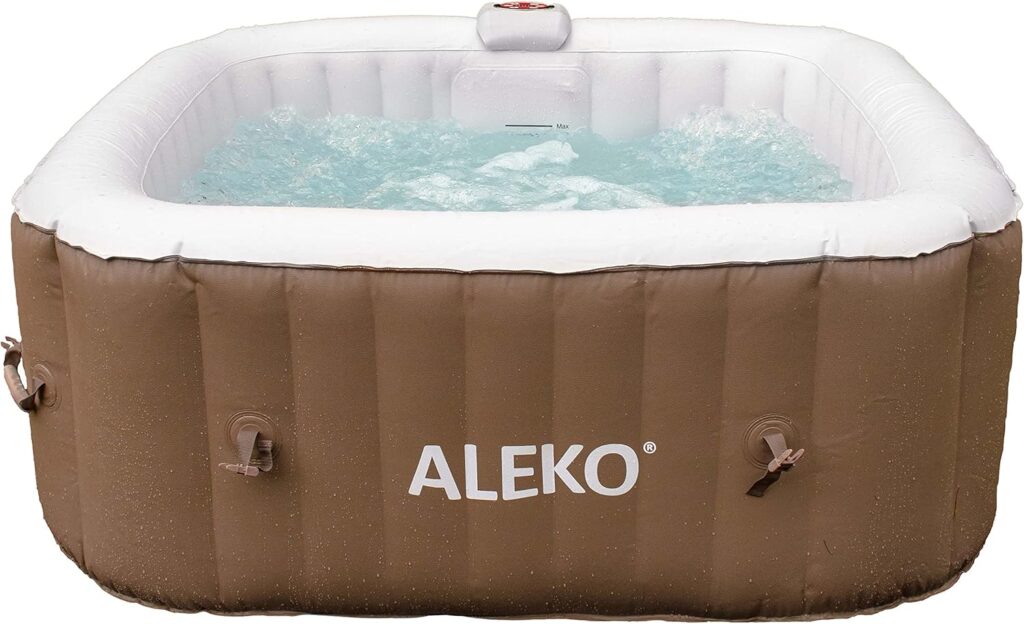

If you’re thinking about getting a hot tub but you’re not ready to spend thousands on a permanent installation, you’ve probably looked at inflatable options. The ALEKO inflatable hot tub spa sits near the lower end of that price range, which makes it tempting if you just want to test whether you’ll actually use a hot tub before committing.
But there are some things you need to understand about how these portable spas work in real life. Heating time tends to be longer than most people expect. Heat loss in cooler weather can be frustrating. And then there’s the actual capacity.
This review walks through what the ALEKO inflatable hot tub spa does well and where it falls short, so you can decide if it’s for you.
Disclosure: As an Amazon Associate I earn on qualifying purchases at no extra cost to you.
Key Features
The ALEKO inflatable hot tub comes in several sizes, with models designed for two, four, or six people. The construction uses reinforced PVC with air chambers that inflate in about 10 to 15 minutes using the included pump.
Most models include 100 to 130 bubble jets positioned around the floor and lower walls. These create a gentle massage effect rather than the focused pressure you’d get from a permanent spa. The bubble system runs separately from the heating function.
The heating element is typically rated at 1200 watts and warms water at roughly one to two degrees Fahrenheit per hour. Maximum temperature reaches 104 degrees.
Each unit comes with a cover that has reflective insulation on the underside to reduce heat loss. You also get a filter cartridge system and a basic control panel for adjusting temperature and activating the bubble jets.
Setup requires access to a standard 120 volt outlet and a water source. No electrician or permanent installation needed, which is part of the appeal for renters or anyone testing hot tub ownership.
Who This Inflatable Hot Tub Is For
- Good fit if you’re testing the idea: You can set this up for a few hundred dollars to see whether you’ll actually use a hot tub regularly before spending thousands on a permanent spa.
- Works well for renters: You can place it on a patio or deck without landlord approval for permanent fixtures, and you can deflate it and take it with you when you move.
- Useful in mild climates or three season use: If you live somewhere with moderate temperatures or you only plan to use it during warmer months, the heating performance will feel more manageable.
- Helpful for regular warm soaks: Many people use these for stress relief or to ease muscle soreness a few times per week, and the combination of heat and bubbles can feel genuinely relaxing.
Who This Portable Hot Tub Is Not For
- Not ideal for very cold climates: In areas where temperatures drop below freezing for extended periods, the heater struggles to maintain temperature and your electric bill climbs quickly.
- May not suit larger groups: The six-person model may feel a bit crowded with more than four adults in the water at once, depending on everyone’s build and how much personal space you prefer.
- Not great if you want instant use: The initial heating time from cold tap water takes 24 to 48 hours, so this is not something you can decide to use on a whim.
- Not the right choice if you hate maintenance: You’ll need to test water chemistry weekly, clean the filter regularly, and drain the tub every few weeks to keep it running properly.
- Not built for decades of use: These inflatable spas typically last two to four seasons with regular use rather than the 10 to 15 years you might get from a quality permanent hot tub.
Heating Performance And Running Costs In This Inflatable Spa
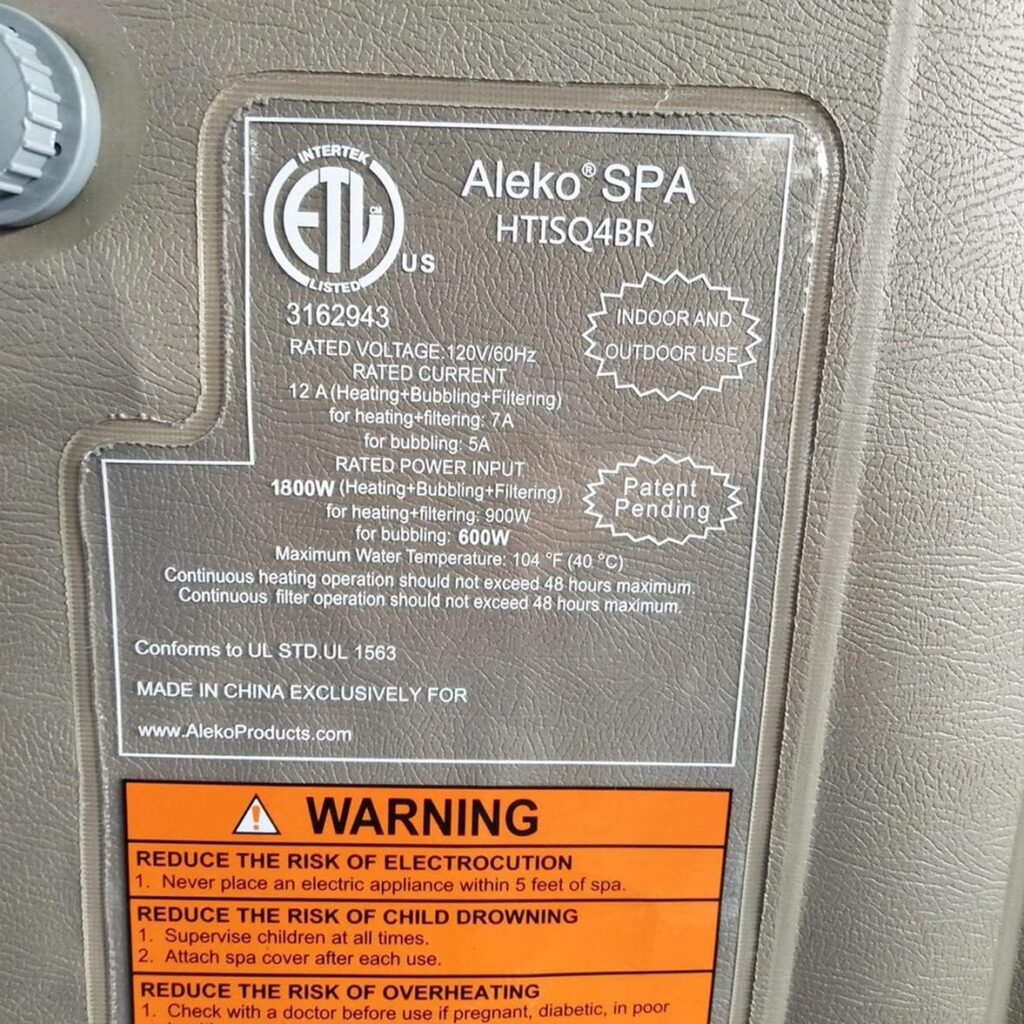
The heating situation is probably the biggest adjustment if you’re new to inflatable hot tubs. The 1200 watt heater warms water slowly, usually around one to two degrees per hour depending on the starting temperature and outside conditions.
If you fill the tub with 60 degree tap water and want it at 104 degrees, you’re looking at roughly a full day to two days of continuous heating before your first soak. That initial wait surprises many buyers.
Once the water reaches temperature, the heater cycles on and off to maintain it. In warm weather with the cover on between uses, this works reasonably well. In cooler weather, the heater runs almost constantly just to keep the water from dropping too much overnight.
Heat loss through the inflatable walls and the water surface is noticeable. Even with the included cover, water temperature can drop 10 to 20 degrees overnight in moderate weather. In cold conditions below 50 degrees, some users report losing 25 to 35 degrees overnight despite using the cover and adding extra insulation around the sides.
Running costs depend heavily on your climate and how often you keep it heated. Expect a jump in the electricity bill if you’re trying to maintain temperature around the clock in cooler climates.
Most people who use these year round in moderate climates keep the tub heated continuously rather than letting it cool and reheating from scratch each time. If you only plan to use it occasionally, you’ll need to build in that day or two of heating time before each session.
See full details of the ALEKO Inflatable Hot Tub on Amazon
Comfort And Seating Inside The ALEKO Inflatable Hot Tub
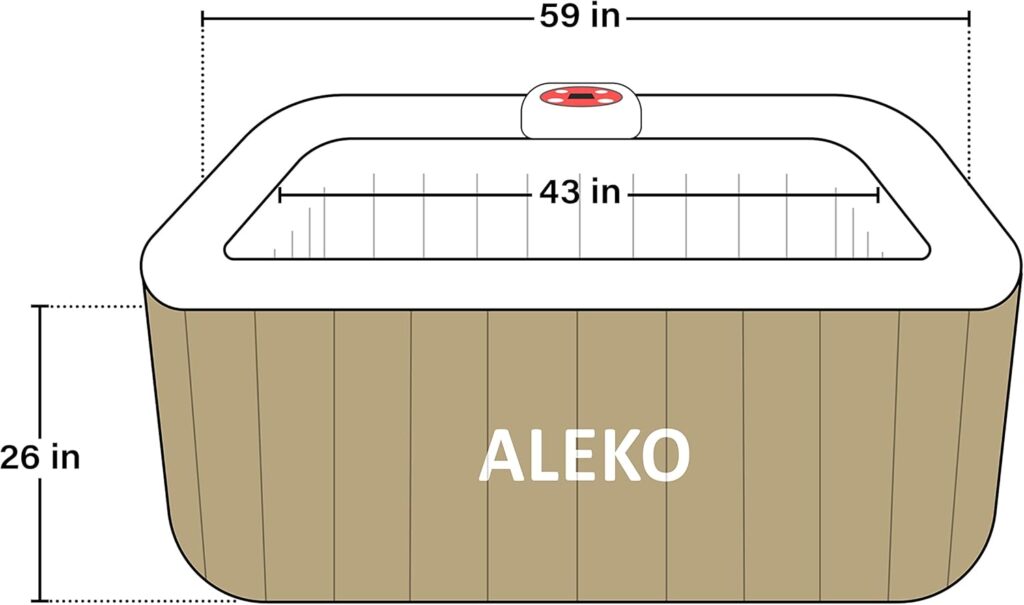
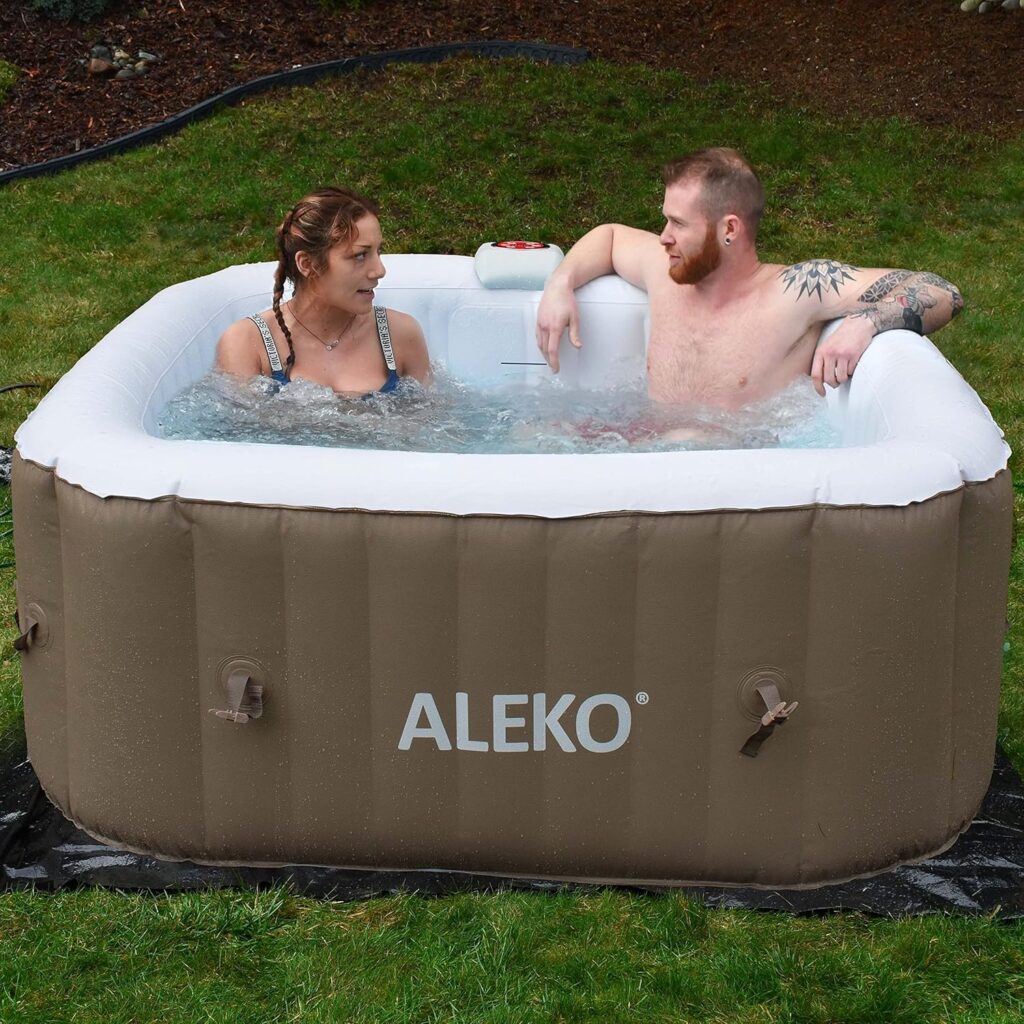
The capacity ratings on inflatable hot tubs tend to be optimistic across all brands, and ALEKO is no exception. A model labeled as fitting four people really feels more comfortable with less if you prefer room to move.
The two-person oval models are designed to suit two people comfortably. The four-person round models often feel like a better fit for two or three, and the six-person models tend to be most comfortable with around four adults.
The bottom of the tub has a cushioned floor that provides more support than you might expect from an inflatable design. The walls give slightly when you lean back, which some people find more comfortable than the rigid walls of a permanent spa.
The bubble jets create a gentle massaging effect across your lower back and legs. This is not the focused hydro jet pressure you’d get from a more expensive permanent hot tub, but many people find it relaxing for general stress relief and muscle relaxation after a long day.
Water depth is sufficient for adults to sit with shoulders submerged. The design keeps you low enough in the water that you don’t feel like you’re sitting in a shallow kiddie pool.
One thing to note is noise. The bubble system makes a noticeable humming sound when running, similar to a vacuum cleaner or loud fan. Some users find this relaxing as white noise. Others find it intrusive, especially if you have close neighbors or you’re trying to have a conversation while soaking.
Shop the ALEKO Inflatable Hot Tub on Amazon
Maintenance And Durability For This Portable Spa
Maintenance requirements are similar to any hot tub, just scaled down. You’ll need to test water chemistry two or three times per week and add chlorine or bromine to keep the water sanitized. The small water volume means chemistry can move quickly, so staying on top of it is important.
The filter cartridge needs rinsing every week or so. You pull it out, spray it down with a hose, and put it back. Some users replace the filter every few uses rather than trying to clean and reuse it repeatedly.
You’ll need to drain and refill the entire tub every four to six weeks depending on use. This takes a few hours and requires a spot where you can safely drain several hundred gallons of water.
Durability is the main question mark with any inflatable hot tub. The PVC material feels sturdy when new, but it’s still inflatable vinyl exposed to heat, chemicals, and UV light. Air leaks at the seams are one of the most common complaints across all inflatable spa brands after six to 12 months of regular use.
The ALEKO models come with a 180 day warranty, which is shorter than some competitors. Many of the mechanical issues like heater failures or pump problems seem to surface around month four to six based on user reports, which puts them close to or just past that warranty window.
Some buyers report the tub lasting two to three seasons with careful use. Others have issues within the first year. The lifespan varies quite a bit depending on how you use it, how you protect it from sun damage, and whether you get a unit that happens to have a weak seam or component.
This is not a buy it for life product. It’s more accurate to think of it as a two to four season trial period for hot tub ownership.
Real World Use And Climate Fit
The ALEKO inflatable hot tub spa works best as a three season spa in most of the United States. Spring, summer, and fall use in moderate climates feels manageable. Winter use in very cold regions becomes a battle with heat loss and high electric bills.
In areas where nighttime temperatures regularly drop below freezing, many owners end up draining and storing the tub for the coldest months rather than trying to keep it heated. The heater simply can’t keep up when outdoor temperatures are in the 30s or below, and you’re burning electricity constantly just to slow the rate of cooling.
In milder climates or during warmer months, the tub can maintain temperature more easily. Covering it between uses makes a huge difference. Some users add insulated wraps around the outside walls or place an insulated mat underneath to reduce heat loss through the ground.
The tub works fine on a patio, deck, or flat yard as long as the surface is level and can support the weight of the filled spa. You’ll want to avoid placing it directly on cold concrete without some kind of insulation underneath.
Portability is one advantage these spas have over permanent installations. You can deflate the tub, fold it up, and move it if you relocate. That flexibility appeals to renters or anyone who might not stay in their current home long term.
Storage between seasons requires some planning. The deflated tub takes up a fair amount of space, and you need to make sure it’s completely dry before folding it to prevent mildew.
Pros
- Simple plug in setup: You can inflate the tub and start filling within an hour, with no electrician or permanent installation required.
- Relaxing bubble massage: The gentle bubbling effect helps with stress relief and muscle relaxation after a long day.
- Portable if you need to move: You can deflate and relocate the spa if you’re renting or planning to move in the near future.
- Lower entry cost to test hot tub ownership: You can try hot tub life for a fraction of what a permanent spa costs before committing to a bigger investment.
Cons
- Slow heating from cold: Initial heating takes 24 to 48 hours from tap temperature, so you can’t just decide to use it the same day.
- Noticeable heat loss in cool weather: Water temperature drops overnight even with the cover on, and the heater runs constantly in colder conditions.
- Real capacity may feel smaller than advertised: The four person models may feel more comfortable for 2-3 adults.
- Regular maintenance required: You’ll need to test water chemistry weekly, clean filters, and drain the tub every month or so to keep it in good shape.
Final Thoughts: Is the ALEKO Inflatable Spa Worth It?
The ALEKO inflatable hot tub spa can work well for the right situation. If you’ve been curious about hot tub ownership but you’re not ready to spend thousands on a permanent installation, this kind of portable spa lets you test the idea without a massive upfront investment.
You can set it up on a patio or deck, use it regularly for a couple of seasons, and figure out whether warm soaks become part of your routine or whether the novelty wears off quickly.
You need to go in with realistic expectations about heating time, heat loss, and actual comfortable capacity. The initial heating period from cold water takes a full day or more. Water temperature will drop overnight in cooler weather, and the heater will run more to compensate.
The capacity ratings are optimistic, so mentally subtract one or two people from whatever the label says. And you’ll be testing water chemistry, cleaning filters, and draining the tub regularly to keep it running properly. These spas tend to last a few season rather than a decade or more.
If you want a permanent spa with powerful hydro jets and year round use in very cold climates, this design will feel limited. But if you mostly picture yourself slipping in for a quiet soak after work a few times a week during warmer months, and you’re comfortable with those trade offs, this kind of portable hot tub can be a good fit. The bubble massage effect works well for general relaxation, the setup is genuinely simple, and the portability gives you flexibility if your living situation might change.
People Also Ask
Can this inflatable hot tub be used in winter?
The ALEKO inflatable hot tub can handle cooler weather but it works best as a three season spa rather than something you’d run all winter in very cold conditions. Temperatures below freezing slow heating significantly and cause much faster heat loss overnight, which drives up running costs. Many owners in cold climates drain and store the tub during the coldest months.
How long does it take to heat up?
Heating time depends on your starting water temperature and outside conditions, but expect roughly one to two degrees per hour. If you’re filling with 60 degree tap water and heating to 104 degrees, the initial warm up typically takes 24 to 48 hours of continuous heating. Once at temperature, the heater cycles to maintain it.
How much does it cost to run?
Running costs vary by climate and usage patterns. In warmer weather, some users report adding $20 to $30 per month to their electric bill when keeping the tub heated regularly. In colder weather or if you’re maintaining temperature year round, costs can climb to $50 to $60 or more per month. Keeping the cover on between uses helps reduce heating costs.
How long will this inflatable hot tub last?
These inflatable spas typically last two to four seasons with regular use and proper care. Some users report issues with air leaks or heater failures within the first year, while others get several seasons of use before problems start to develop (if any). The 180 day warranty covers manufacturing defects.
What kind of maintenance does it need?
You’ll need to test water chemistry two or three times per week and add chlorine or other sanitizers to keep the water clean. The filter needs rinsing weekly and replacing periodically. You’ll drain and refill the entire tub every four to six weeks depending on usage. Total maintenance time is usually 30 to 45 minutes per week.
Can you leave it set up year round?
You can leave it set up year round in mild climates where temperatures stay moderate. In regions with harsh winters and extended freezing temperatures, most owners drain and store the tub during the coldest months because the heater can’t keep up with heat loss and running costs become excessive.