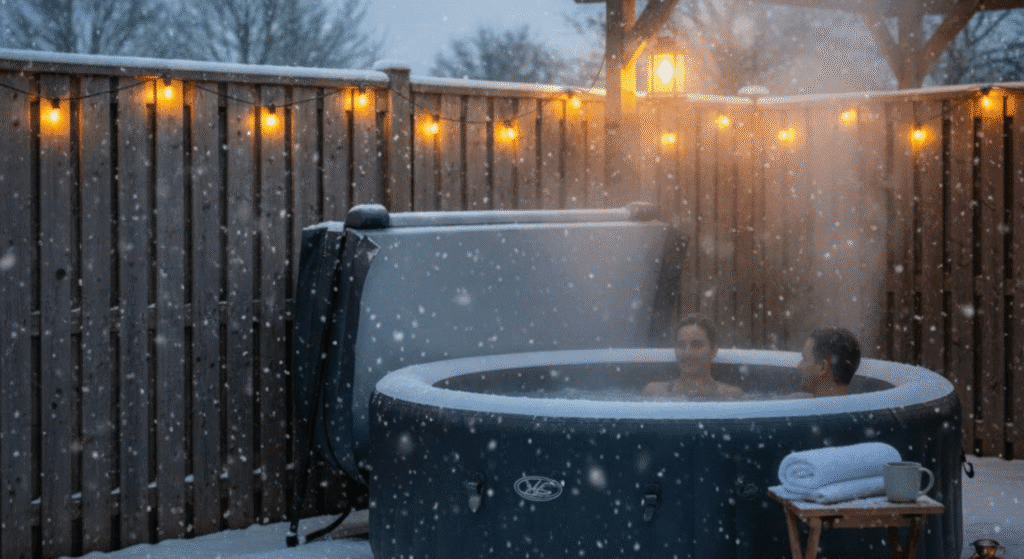

Inflatable hot tubs have come a long way in the past few years. What used to be flimsy summer-only products are now built with serious insulation, freeze protection systems, and heaters to help your spa survive the winter.
The difference between a winter-ready inflatable spa and a basic model often comes down to a few key features: thermal ground insulation, an insulated lid that actually seals tight, freeze protection for the pump, and a heating element that can keep up with heat loss in cold weather.
The best inflatable hot tubs for winter use materials like Fiber-Tech or reinforced PVC with multiple layers, and many now include energy-saving covers and automatic temperature maintenance modes. Some models are explicitly rated for use down to 14°F or even lower, while others work fine in milder winter climates with a little help from DIY insulation upgrades.
Whether you live somewhere with occasional frosty mornings or regular sub-zero nights, there’s an inflatable spa that can handle your winters without breaking your budget or requiring constant babysitting.
Disclosure: As an Amazon Associate I earn on qualifying purchases at no extra cost to you.
Top Picks: Inflatable Hot Tubs for Winter
1. Coleman SaluSpa Bahamas AirJet
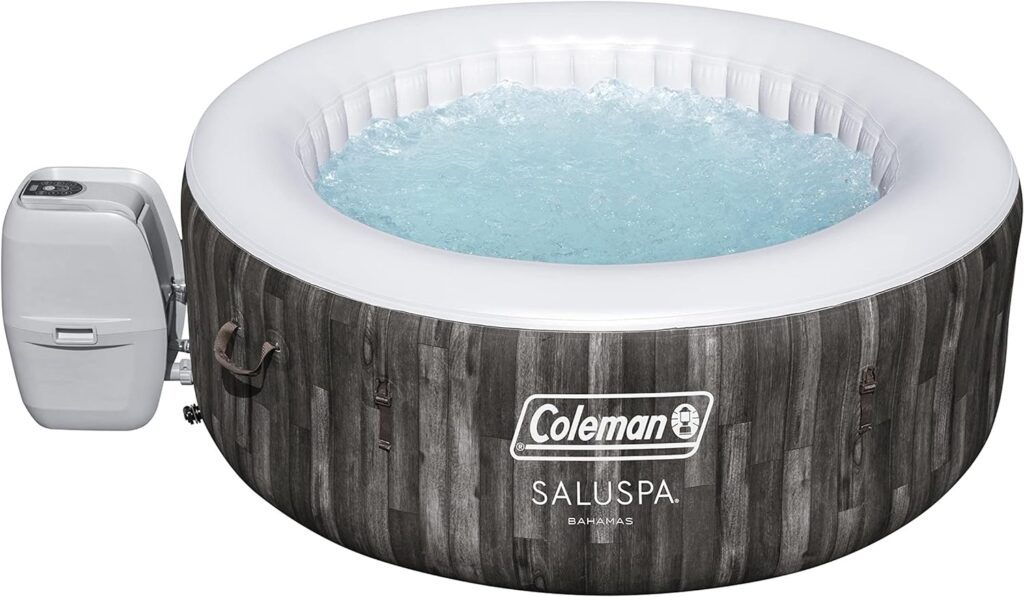
This compact inflatable spa is sized for up to 4 adults and includes Freeze Shield™, an automatic heating function designed to help prevent water in the system from freezing and protecting the spa’s inner components when needed.
The 120 AirJets provide an all-around bubble massage, and the reinforced cover helps reduce heat loss when the spa isn’t in use. There’s also a power-saving timer that lets you schedule heating cycles, which can help manage run time (and therefore energy use) depending on your setup and weather.
Overall, it’s a solid all-around pick for anyone who wants the familiar Coleman inflatable spa setup with cold weather protection features without stepping up into higher-priced rigid hot tubs.
Note: The owner’s manual also notes the spa should not be used when the ambient temperature reaches 14°F (-10°C) or colder.
Check Price of Coleman SaluSpa Bahamas on Amazon
2. Intex PureSpa 4-Person Round Hot Tub
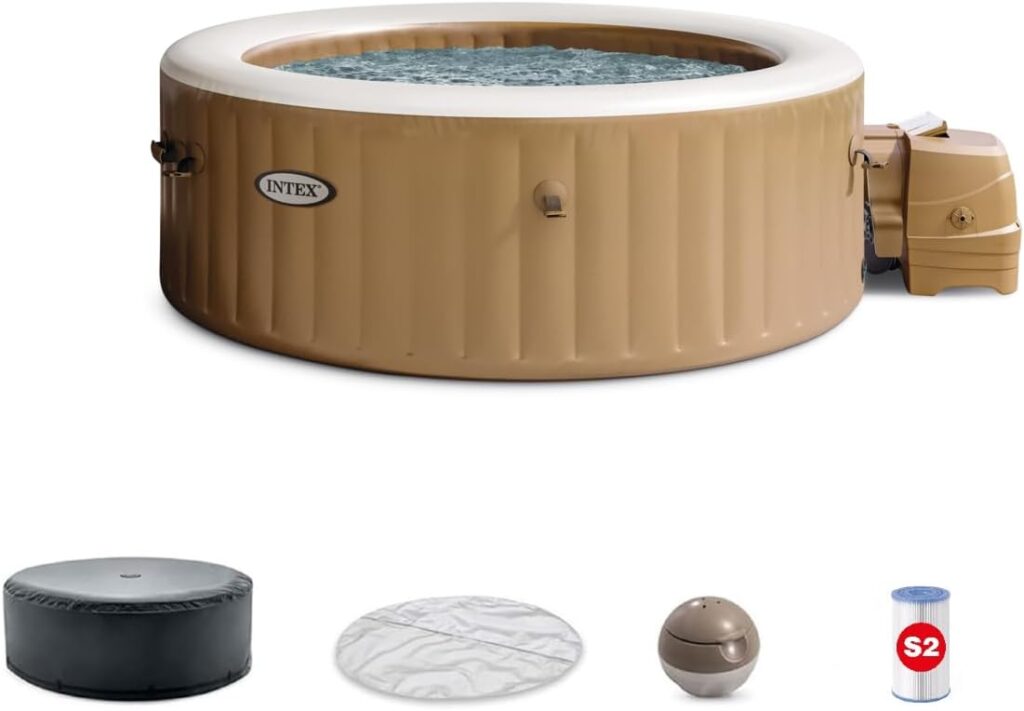
The standard Intex PureSpa uses thick Fiber-Tech construction and comes with a strong pump and heater unit. Many owners have winterized these tubs by placing foam board under the base, upgrading to a better insulated cover, and sometimes adding a simple windbreak or shelter.
Note that outdoor temperature must be at least 50°F in order for the hot tub to reach 104°F. If you’re willing to invest a little time in DIY insulation, this model offers solid build quality.
Check Price of Intex PureSpa 4-Person Inflatable Hot Tub on Amazon
3. Coleman Miami AirJet Hot Tub
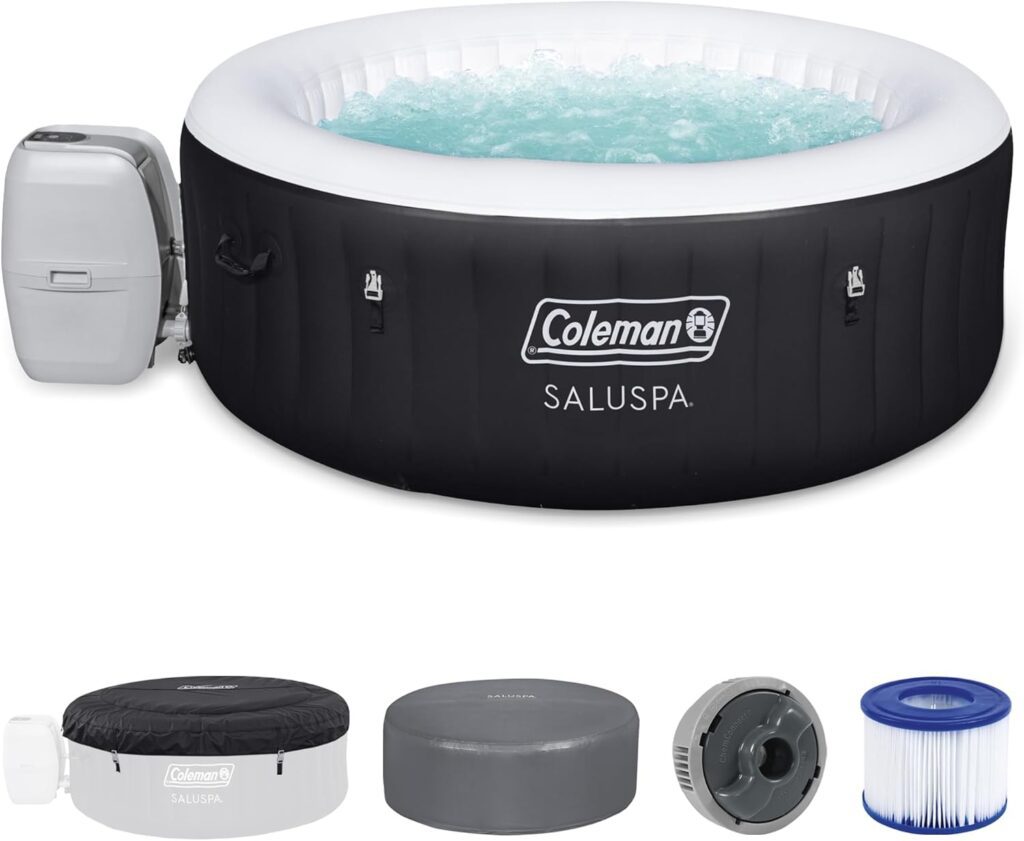
The Miami runs 120 AirJets and includes Freeze Shield to protect components when temps drop, heating water from 40 to 104 degrees on standard household power. The EnergySense cover helps retain heat better than basic models, and the reinforced material tends to hold up well against punctures.
The key limitation is right in the specs: you can’t use this spa when ambient temperature drops below 39 degrees. That makes it a better fit for mild winter climates where freezing nights are occasional rather than the norm.
If you’re dealing with sustained cold or long stretches below freezing, you’ll likely need to drain and store it during those weeks.
Check Price of the Coleman Miami AirJet Hot Tub on Amazon
4. Intex PureSpa Plus (Greystone Deluxe with Saltwater System)
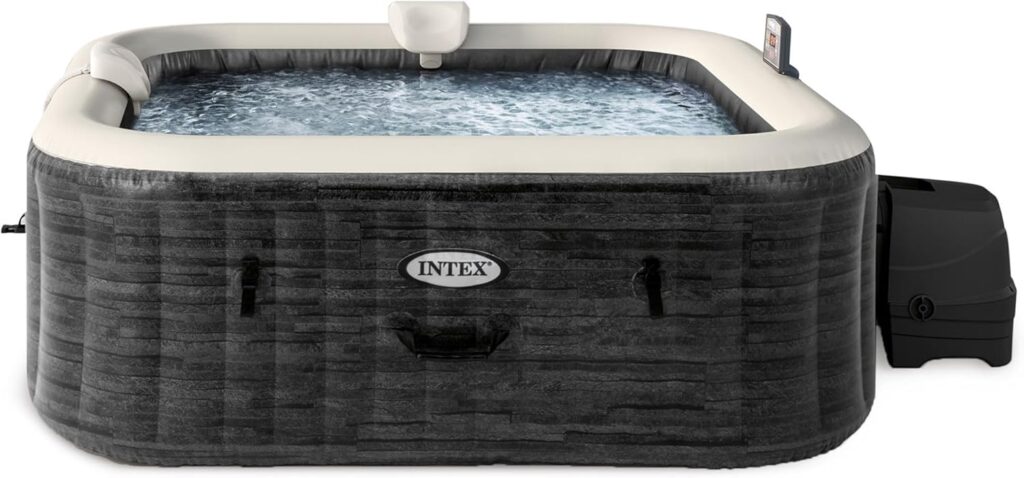
The PureSpa Plus / Greystone Deluxe is Intex’s upgraded option, with sturdier Fiber-Tech construction, easier filter changes via the integrated control box, and improved digital controls.
It also includes a built-in hard water treatment system to help reduce mineral buildup, plus a well-insulated cover to cut heat loss.
Some models add a saltwater sanitation system, which can make water care simpler through winter.
Check Price of Intex PureSpa Plus or PureSpa Greystone Deluxe on Amazon
5. Coleman Hawaii AirJet Hot Tub
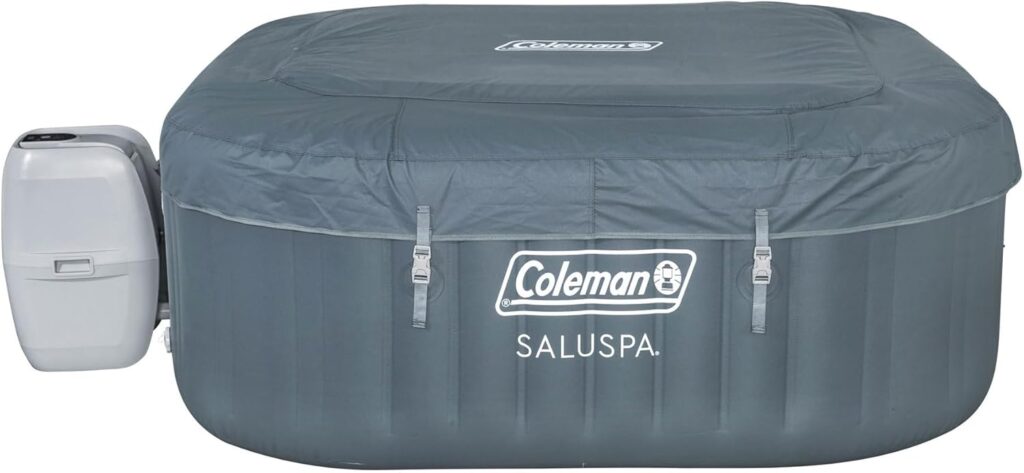
This 4–6 person square inflatable spa uses an AirJet system (bubbling air jets) with 140 jets, delivering a warm, bubbly massage experience and heating up to 104°F.
It includes winter-friendly features such as an EnergySense insulated cover (listed as 40% more energy efficient) and FreezeShield automatic heating, designed to help keep the internal components from freezing.
The Hawaii model also includes good insulation and a strong heater, making it a great pick for anyone who wants a more spa-like experience in cold weather. One important note for colder winter conditions: the listing states this spa cannot be used in temperatures below 39°F.
Check Price of the Coleman Hawaii AirJet Hot Tub on Amazon
Conclusion
Inflatable hot tubs can work well in winter when you choose a winter ready model and set it up correctly.
The best inflatable hot tub for winter has strong insulation under the base, a thick insulated cover that seals well, and freeze protection to reduce the risk of frozen pipes and pump damage.
Coleman SaluSpa and Intex PureSpa are popular options for cold weather use, especially when you add rigid foam board under the tub, block wind, and keep the heater running. Always check the owner manual for the lowest recommended outdoor temperature and follow the winter use guidelines.
With the right inflatable hot tub, keeping the water warm, and balanced water care, you can enjoy warm 104°F soaks through the cold season without constant maintenance.
Frequently Asked Questions
Can inflatable hot tubs be used in the winter?
Yes, inflatable hot tubs can be used in winter as long as the tub is rated for cold weather and you follow the manufacturer’s guidelines. Owners in Pennsylvania, Michigan, and other cold states have successfully run inflatable tubs through multiple winters by keeping the heater running, using proper insulation, and checking the tub regularly.
Problems usually happen when water freezes inside pipes or the pump, or when someone turns off the power during very low temperatures. Models with freeze protection automatically maintain just enough warmth to prevent ice damage even if the temperature drops unexpectedly.
How cold is too cold for inflatable hot tubs?
How cold is too cold for inflatable hot tubs depends entirely on the model. Many standard inflatable tubs are only rated down to about 40 to 43°F ambient temperature and should not be used below that.
Always check your specific tub’s manual. If you regularly experience sub-zero Fahrenheit temperatures, choose a model that explicitly mentions freeze protection and plan to add strong insulation and wind protection.
Is it cheaper to keep the tub hot all the time or heat it only when I use it in winter?
In cold weather, maintaining a constant temperature is usually more effective than letting the water cool fully between uses. Reheating several hundred gallons from near-cold uses a huge amount of energy, especially if you do that repeatedly.
A better approach is to set a steady temperature around 100 to 102°F and use an insulated cover plus thermal blanket to reduce heat loss.
This keeps the heater working steadily as opposed to running flat-out to catch up from low temperatures, which saves both energy and wear on the equipment.
What insulation upgrades make the biggest difference in winter?
A few simple upgrades help a lot. First, place the tub on 2-inch rigid foam board to stop heat escaping into the ground.
Second, use a thick, well-fitted insulated cover and consider adding a floating thermal blanket directly on the water.
Third, wrap hoses in pipe insulation and cover the pump with an insulated jacket. Fourth, position the tub near a wall or under a roof to block wind.
These upgrades are inexpensive compared with the tub itself and can cut your heating costs by 30% or more while making the spa far more comfortable to use.
What to put under an inflatable hot tub in winter?
Put your inflatable hot tub on a flat, solid surface (concrete patio, pavers, or a well-compacted deck base), then add insulation to reduce heat loss. A common setup is a hot tub mat under the entire footprint, topped with a protective mat or tarp to prevent abrasion and moisture damage.
If wind is an issue, adding a simple windbreak (privacy screen, fence side, or gazebo wall) often helps more than extra layers, because wind pulls heat from the tub and cover fast.
Can a SaluSpa be used in winter?
Yes, many SaluSpa models can be used in winter as long as you follow the owner’s manual and the model’s minimum ambient temperature rating. Models with Freeze Shield are designed to help prevent components from freezing by running an automatic heating cycle when needed.
If your area regularly drops below your model’s rated limit or you’re at risk of power outages, the safest option is to drain, dry, and store the spa during the coldest stretches to avoid freeze damage.
How do I keep the water from freezing if I go away in winter?
You have two safe options. First, you can leave the tub running with the heater on, set to a stable temperature, with freeze protection enabled if your model has it.
Ask someone you trust to check on the tub, power supply, and cover every couple of days while you’re gone.
Second, you can fully winterize and store the tub by draining it completely, cleaning the liner, drying every component, disconnecting and draining the pump and hoses, and storing everything indoors. Manufacturers strongly recommend full winterization if the tub will be unattended during freezing weather, especially in areas prone to power outages.
Is 30 degrees too cold for a hot tub?
30°F (-1°C) isn’t automatically too cold for a hot tub, but it depends on the tub and how you run it. A properly insulated, winter-rated tub can handle it if the heater stays on, the cover fits tightly, and you block wind.
For many inflatable models, 30°F is below their recommended use range, so check your manual. If the manufacturer lists a minimum ambient temperature above 30°F, running it can increase the risk of freeze damage if the heater can’t keep up or power cuts out.
What will ruin a hot tub in the winter?
The biggest winter killer is water freezing inside the plumbing, pump, or heater. Often after the power is turned off, the heater can’t keep up, or the tub is left unattended in a cold snap.
Other common causes are poor water chemistry (corrosion/scale), letting snow and ice overload the cover, and failing to properly drain and dry the system if you decide to store it.
What happens if an inflatable hot tub freezes?
When water freezes, it expands, which can crack fittings, split hoses, damage the pump, or break internal heater components. Even if the liner looks fine, the hard parts are often what get damaged first.
If this happens, don’t try to force it to run. Let it thaw naturally, inspect for leaks, and check the pump/heater before powering it back on.
What is the life expectancy of an inflatable hot tub?
Many inflatable hot tubs last around 2–5 years with regular use, and longer if they’re well cared for (balanced water, protected base, good cover habits, and stored correctly when not in season).
Frequent winter use without enough insulation, poor water care, leaving it exposed to sun and weather, or running it outside the model’s temperature limits can shorten that lifespan significantly.