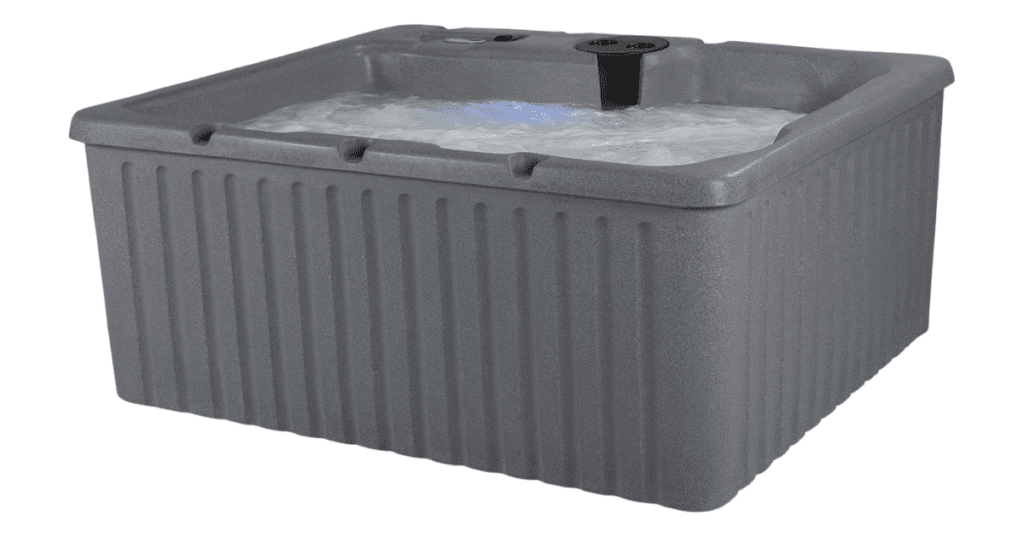

The AquaLife Current Outdoor Hot Tub has caught the attention of many first-time spa buyers who want a real heated spa without the electrical work or dealer showroom pricing.
With 14 hydrotherapy jets, a genuine stainless steel heater, and a compact footprint that plugs into a standard outlet, it’s positioned as an accessible entry point into hot tub ownership.
That said, plug and play designs come with trade-offs. Heating performance in cold weather, realistic capacity, and what happens when you need service can shape your experience just as much as the features on paper.
In this review I’ll walk you through what daily ownership looks like—from moving it into place to winter soaking to ongoing care—so you can decide if this portable hot tub is the right fit for your backyard.
Disclosure: As an Amazon Associate I earn from qualifying purchases at no extra cost to you.
AquaLife Current Outdoor Hot Tub: Specs at a Glance
| Feature | Specification |
|---|---|
| Dimensions | 71″ L × 61″ W × 29.5″ H |
| Empty Weight | 300 lbs |
| Water Capacity | ~250 gallons |
| Seating | 3-4 adults |
| Jets | 14 stainless steel hydrotherapy jets |
| Pump | 2 HP, 2-speed |
| Heater | Balboa stainless steel |
| Power | 120V/15A standard (convertible to 240V) |
| Max Temperature | 104°F |
| Shell Material | Rotomolded resin |
| Cover Included | Yes, insulated with locking clips |
Check Price of the AquaLife Current on Amazon
Key Features of the AquaLife Current Hot Tub
The Aqualife Current Outdoor Hot Tub is thoughtfully engineered to get you soaking without requiring an electrician or a concrete pad.
Lightweight Resin Construction: The rotomolded resin shell keeps weight down to around 300 pounds empty, light enough for two or three people to maneuver into position. The 71 inch by 61 inch footprint fits patios, decks, and smaller yards where a seven person spa would crowd the space.
14 Stainless Steel Hydrotherapy Jets: These jets deliver targeted water pressure powered by a 2 peak horsepower two speed pump. You get adjustable flow for back, shoulders, and legs rather than just gentle bubbling.
- Balboa Stainless Steel Heater: This is a genuine heating element, not a friction heater. It brings water to 104 degrees Fahrenheit and holds that temperature between soaks. The spa runs on standard 120 volt power but can be converted to 240 volts by an electrician if you live in a colder climate or want faster heating.
- Insulated Cabinet and Tapered Cover: The resin shell includes interior insulation to help retain heat. The included cover is thick, tapered for water runoff, and comes with locking clips to secure it when the spa is not in use.
LED lighting and Lounger Seating: Underwater LED lighting sets the mood for evening soaks. The interior layout includes one lounger seat plus bucket style seating for three to four adults.
Setup And Moving The AquaLife Current Into Place
The Current ships on a pallet and arrives curbside. From there, you’re on your own.
At 300 pounds empty, this is manageable for a few strong adults with a furniture dolly or pallet jack. Some owners tip the delivery driver to help roll it into the backyard, though that’s not guaranteed. If you have stairs, tight gates, or a long distance to cover, budget for hiring a couple of movers.
You’ll need a level base that can support around 2,000 pounds when filled. Options include:
- Concrete pad (most stable, but also most expensive)
- Well-compacted gravel base topped with pavers
- Composite spa pads designed for hot tubs (available on Amazon)
The key is making sure the surface stays level over time. Uneven settling can stress the shell and plumbing connections.
Once positioned, plug the included GFCI cord into any standard 120V outdoor outlet, fill with a garden hose, and power it on. Initial heat-up takes 24 to 36 hours depending on your starting water temperature and outdoor conditions. After that, the insulated cabinet keeps the water nice and warm between uses.
Check Price & Availability of the AqualLife Current on Amazon
Heating Performance And Running Costs
120V vs 240V Performance: Understanding Your Options
The Balboa stainless steel heater does the job, but your experience depends heavily on climate and whether you stick with 120 volts or convert to 240.
120V vs 240V Performance Comparison
| Feature | 120V (Standard) | 240V (Upgraded) |
|---|---|---|
| Installation | Plug into standard outlet | Electrician installs dedicated circuit |
| Heat-Up Time | 24–36 hours from cold | 12–18 hours from cold |
| Heater + Jets | Struggles running together on high | Can run simultaneously |
| Cold Weather | Struggles below freezing | Maintains temp reliably |
| Monthly Electric (mild) | ~$30–$50 | ~$40–$60 |
| Monthly Electric (cold) | ~$60–$80+ | ~$50–$70 |
| Best For | Mild climates, 3-season use | Year-round use, cold climates |
On 120 volts, the heater cannot run while the jets are on high. So as you soak, the water slowly cools, and the heater only turns back on once you turn the jets down or off. In mild weather, that is usually fine. When it is cooler out, especially if you soak for 30 minutes or more, the water may drop a degree or two by the end of your session.
The bigger issue is recovery time. If outdoor temps drop below freezing and you’re using the spa daily, the 120V heater works harder to maintain 104°F, and heat-up times stretch longer between soaks.
Converting to 240V solves most of these frustrations. The heater runs at full capacity even with jets on high, heat-up time drops significantly, and the spa handles cold snaps without struggling. If you’re in the upper Midwest, New England, or anywhere with sustained sub-freezing winters, that conversion becomes less of an upgrade and more of a necessity.
Running costs will vary. In mild climates on 120 volts, expect around $30 to $50 per month added to your electric bill. In colder areas, that can climb to $60 to $80 or more, especially if the spa sits exposed to wind.
Keeping the cover on when not in use, placing the spa in a sheltered spot, and maintaining good water chemistry all help control costs.
Comfort And Seating Inside The AquaLife Portable Hot Tub
Seating layout
The lounger works well for one person who wants to stretch out. The jets target your back and legs, and water depth is enough to keep your shoulders submerged if you’re average height. Taller adults might find their knees or shoulders poking out depending on how they position themselves.
The bucket seats provide decent support for sitting upright and two people can sit across from each other comfortably.
Hydrotherapy jet performance
The 14 jets are adjustable and provide solid hydrotherapy. They’re noticeably stronger than inflatable air jets but not as powerful as a premium 240V spa with multiple pumps. For general relaxation, easing tension in your back and shoulders after work, and unwinding before bed, they do the job.
Noise level
The pump hums when running, and the jets create a steady bubbling sound. It’s not whisper-quiet, but most owners find it blends into the background once they’re soaking. If the spa sits close to a bedroom window or you have noise-sensitive neighbors, you may have to think about placement.
AquaLife Current Hot Tub Water Chemistry and Weekly Maintenance
The Current requires the same basic weekly maintenance as any hot tub: test the water, adjust pH and sanitizer levels, rinse or replace the filter, and drain the spa every three to four months.
Weekly routine
Water chemistry is straightforward once you get the hang of it. Test strips or a liquid test kit tell you where your pH, alkalinity, and sanitizer levels sit. Most owners spend 10 to 15 minutes per week keeping things balanced. The spa does not include an ozone system or saltwater generator, so you will handle sanitizing with chlorine or bromine tablets.
Filter maintenance
The filter cartridge needs rinsing every week or two and replacing every few months depending on usage. Replacement filters are inexpensive and easy to find online or at pool supply stores.
Draining and refilling
Plan to drain and refill every three to four months, or when the water starts looking off despite balanced chemistry. With a garden hose adapter and a submersible pump, you can empty the spa in under an hour, wipe down the shell, and refill.
New owners often worry about water chemistry, but it becomes straightforward after the first drain-and-refill cycle. The main thing is sticking to a consistent weekly routine rather than letting it slide for weeks and then trying to rescue cloudy or foamy water.
Need help with water care? Check our hot tub maintenance guide for a simple weekly routine that keeps water crystal clear.
Rotomolded Hot Tub Durability and Component Lifespan
The resin shell is durable and impact resistant, though it lacks the glossy finish and visual appeal of acrylic. Scratches and scuffs are less noticeable on the granite texture, and the material holds up well to UV exposure and temperature swings.
Cover lifespan
The included cover does its job but is not premium quality. Owners report it holding up for a year or two before showing signs of water absorption or wear. Replacing the cover every few years is common across all hot tub brands, so this is not unique to the Current.
Investing in a cover lifter early on makes opening and closing the spa easier and reduces strain on the cover itself.
Component longevity
The Balboa heater and pump are widely used across many spa brands, which means replacement parts are readily available and many independent technicians can work on them. This is a plus compared to proprietary systems that lock you into specific service networks.
Typical lifespan for a spa in this category is five to ten years with regular maintenance. The resin construction and straightforward components mean repairs are usually manageable, though you’ll likely replace the cover, filters, and possibly a pump or sensor at some point.
AquaLife Current – Pros & Cons
Pros
True plug and play design with no electrician required upfront: You can start soaking the same day without waiting for electrical work, and the option to convert to 240V later gives you flexibility.
Compact footprint fits smaller yards and patios: The 71″ × 61″ size works in spaces where larger spas would overwhelm the area.
Real hydrotherapy jets provide solid muscle relief: The 14 stainless steel jets deliver targeted pressure that helps with back tension and soreness, a noticeable step up from inflatable bubble massage.
- Lightweight rotomolded construction simplifies placement: At 300 pounds empty, it’s manageable for DIY setup with a dolly and a few helpers.
- Resin construction is durable and low maintenance: The shell resists scratches and weathering better than acrylic, and the textured finish hides minor wear that would stand out on a glossy surface.
Perfect Size for Small Groups: While it comfortably fits four adults, some reviewers mention that it is perfect for more intimate use, such as two people wanting extra space to lounge.
Value for Money: Considering its features and durability, the price point is reasonable and competitive compared to other models in this category.
Cons
Heat Retention Varies: There are mixed opinions regarding how well the hot tub retains heat. Some users experience satisfactory warmth with the help of the insulated cover, but others suggest that upgrading to the 240V option would improve heater performance on cold days.
Control Module Feedback is Mixed: A few users report that the control system can be somewhat finicky or less intuitive, which might require a learning curve.
- Jets lack the intensity of higher end acrylic spas: The massage is effective for general relaxation but will not match the deep tissue pressure of a 240 volt model with multiple pumps and stronger jet configurations.
Limited Capacity for Larger Groups: While suitable for up to four adults, larger gatherings will require a bigger spa.
Final Thoughts
The AquaLife Current gives you a way to test hot tub ownership without the upfront cost or complexity of a traditional dealer spa. It works well for couples or small households in mild to moderate climates who want a nightly soak to unwind, ease muscle tension, or simply enjoy warm water outdoors.
You may find the 120V heater a bit underpowered in very cold climates, unless you convert to 240V early on. The jets still deliver solid hydrotherapy, even if they do not quite reach deep tissue intensity. As for ownership, expect straightforward weekly maintenance, and plan to replace the cover as it wears out.
If you live where winters are harsh and want year-round use, convert to 240V or choose a different spa. If you regularly host groups of four or more, look for a larger model. For someone who pictures slipping in for a quiet soak after work and is comfortable with simple weekly care, this portable hot tub can be a good fit.