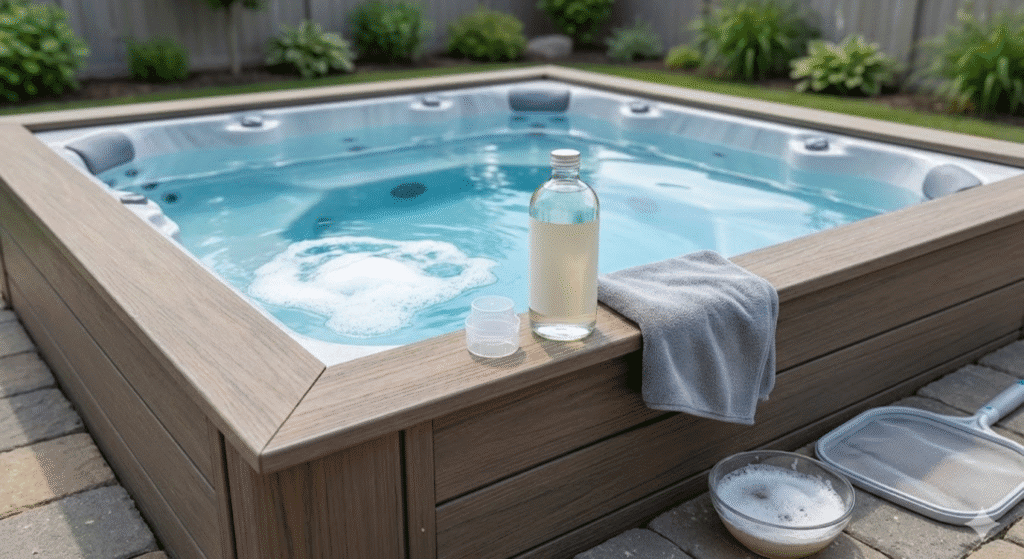

If you enjoy relaxing in your spa or hot tub, you know how frustrating it can be when pesky foam ruins the serene experience. The last thing you want is foam climbing over the waterline, spilling onto the deck, and turning your relaxation time into a cleanup job.
That’s where a good hot tub defoamer comes in, and in this article I’ll walk you through the best options, how to use them properly, and what’s really causing the foam in the first place.
Disclosure: As an Amazon Associate I earn on qualifying purchases at no extra cost to you.
Quick Picks: Best Hot Tub Defoamer at a Glance
| Product | Size | Works In | Key Strength | Best For |
|---|---|---|---|---|
| Leisure Time Foam Down | 32 oz | 1-2 minutes | Fast action, silicone-based | Heavy foam emergencies |
| SpaGuard Anti-Foam | 16 oz | 2-3 minutes | Compatible with all sanitizers | Regular maintenance use |
| AquaDoc Hot Tub Defoamer | 32 oz / 128 oz | 2-5 minutes | Large bottle, best price per ounce | Frequent users, multiple spas |
What Is a Hot Tub Defoamer?
A hot tub defoamer is a chemical product designed to collapse foam and bubbles that form on the water surface. It works by breaking down the surface tension that traps air in the water when the jets are running.
Most defoamers use either silicone-based compounds or enzymes. Silicone formulas spread across the water surface and pop bubbles immediately, usually within one to three minutes. Enzyme-based products work more slowly but break down the oils and organic materials that cause foam in the first place.
To use, add the defoamer directly to the water when foam appears. One capful typically treats 400 to 500 gallons. The jets circulate the product throughout the spa, and the foam collapses as the defoamer makes contact with the bubbles.
Note that defoamer does not fix the root cause of foam. It treats the symptom by eliminating bubbles, but if oils, lotions, or low calcium created the problem, those issues remain. Think of it as a quick fix that buys you time to address the underlying water chemistry or maintenance problems.
Most spa owners keep defoamer on hand for emergencies when foam appears unexpectedly. It clears the water fast enough that you can salvage a soak session or get the spa presentable before guests arrive. For long-term foam prevention, proper water maintenance matters more than frequent defoamer use.
Best for Heavy Foam Emergencies – Leisure Time Foam Down
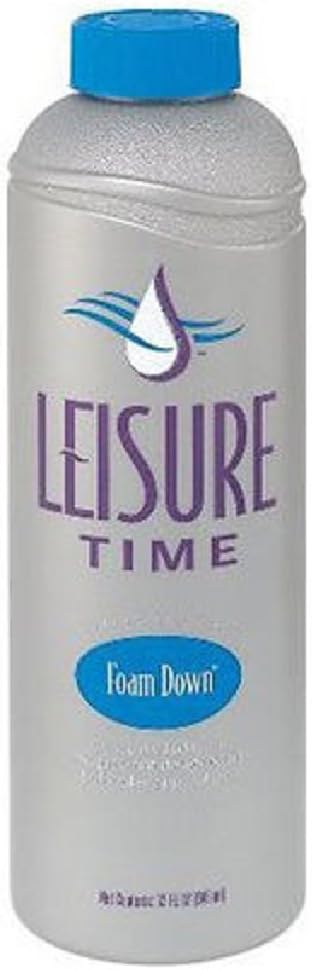
When foam takes over your spa and you need it gone now, Leisure Time Foam Down handles the job faster than most competitors. It uses a formula that breaks surface tension immediately, collapsing bubbles within one to two minutes of application.
This is the product to reach for when guests are arriving in 20 minutes and your tub looks like a car wash.
Pros:
- Collapses foam in one to two minutes, faster than enzyme-based products
- Silicone formula works immediately on contact with water
- Compatible with all sanitizer types including salt systems
- One bottle handles months of occasional use in most residential spas
- Does not interfere with pH or alkalinity levels
Cons:
- Does not address the underlying cause of foam like oils or detergent residue
- Silicone can build up over time if overused, requiring eventual drain and refill
- Slightly more expensive per ounce than some alternatives
- Small bottle can be easy to knock over near the spa
Best for:
- Emergency foam situations when you need clear water immediately
- Spas with recurring foam issues from heavy bather load
- Owners who prefer fast-acting chemical solutions over slow enzyme treatments
- Keeping on hand as backup even if you use preventative products regularly
If foam shows up unexpectedly and you need it cleared before anyone notices, this one does the job without making you wait.
Best for Regular Maintenance Use – SpaGuard Anti-Foam
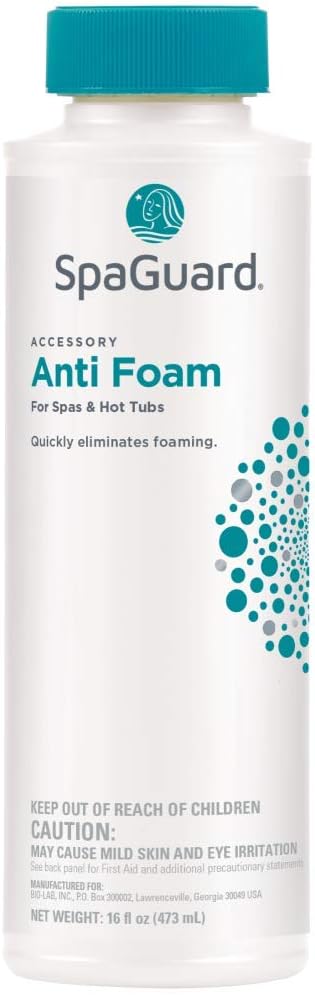
SpaGuard Anti-Foam balances speed with gentle chemistry. It clears foam in two to three minutes and works well as part of a regular maintenance routine without building up residue as aggressively as purely silicone formulas.
The 16-ounce bottle treats around 30 to 40 applications depending on spa size and foam severity. It works across all sanitizer systems and does not cloud the water or leave an oily film behind. Owners who use it weekly as a preventative measure report fewer foam incidents overall compared to waiting until foam appears.
This sits in the middle ground between emergency products and long-term enzyme treatments.
Pros:
- Clears foam within two to three minutes of application
- Works as both treatment and preventative when used weekly
- Compatible with chlorine, bromine, and alternative sanitizers
- Does not cloud water or leave visible residue on the surface
- Reasonable price for the amount of treatments per bottle
Cons:
- Slightly slower than the fastest silicone products
- Still treats symptoms rather than removing oils and organics long-term
- Requires regular use to prevent foam from building up again
- Bottle design can make precise pouring difficult
Best for:
- Owners who want a reliable product for both emergencies and weekly prevention
- Spas that see moderate use with occasional foam from lotions or body oils
- Anyone looking for a middle option between instant action and enzyme breakdown
- Maintaining clear water without draining and refilling as often
If you want something that works fast enough when foam appears but also helps reduce how often it happens, this one covers both angles.
Best Value – AquaDoc Hot Tub Defoamer
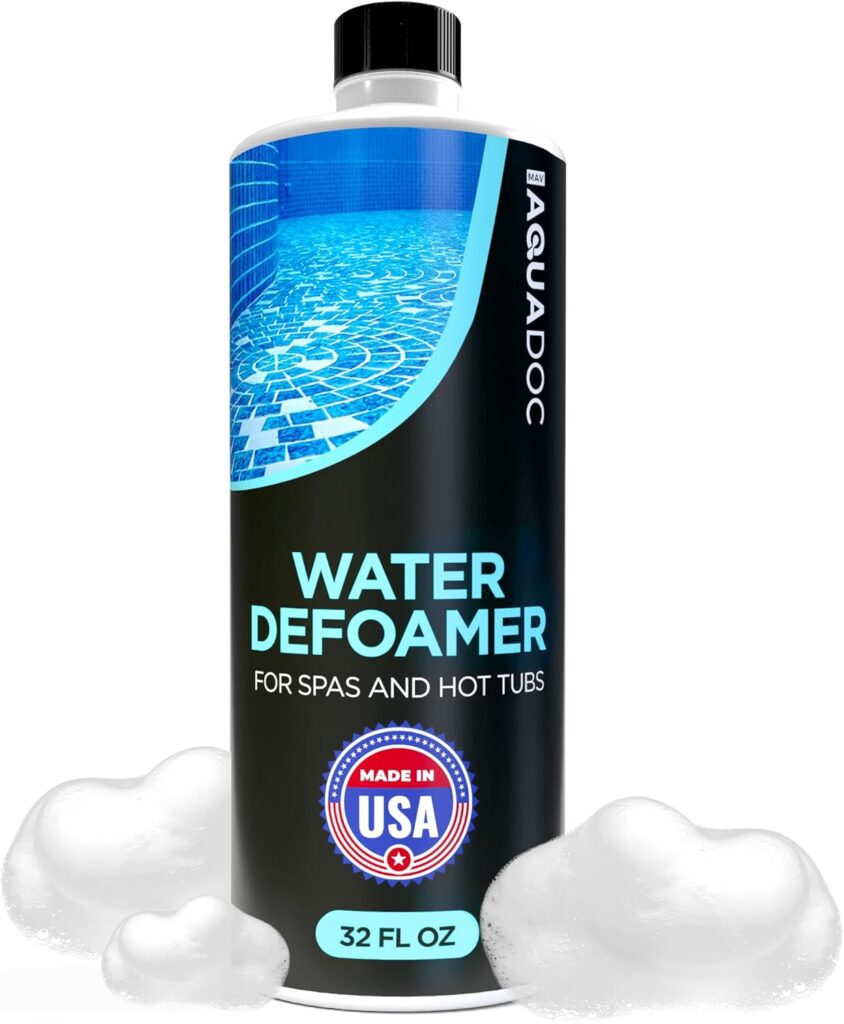
AquaDoc offers a 32-ounce and 128-ounce bottle that handles more treatments than most competitors at a lower cost per ounce. It clears foam in two to five minutes using a silicone-based formula that works across all sanitizer types. The larger size appeals to owners who deal with foam regularly or run multiple spas.
The bottle treats roughly 40 to 50 applications depending on foam severity and spa size. Reviews mention that a little goes a long way, with most foam situations requiring only one to three ounces.
This product works well for owners who want a reliable defoamer on hand without paying premium prices for name brands. The formula performs similarly to more expensive options but offers better value when buying larger quantities.
Pros:
- Clears foam within two to five minutes of application
- Works with chlorine, bromine, and saltwater systems without affecting chemistry
- No noticeable scent or residue left on water surface after use
- Lower cost per ounce than premium brands while delivering similar results
Cons:
- Takes slightly longer to work than the fastest silicone products
- Larger bottle can be awkward to handle when pouring near the spa
- Still treats symptoms rather than preventing foam long-term
- Silicone formula contributes to TDS buildup with frequent use
Best for:
- Owners who use defoamer multiple times per month and want better value
- Anyone managing foam across multiple spas or a large residential spa
- Budget-conscious buyers who still want effective foam control
- Keeping a backup supply without spending on smaller, pricier bottles
If you go through defoamer regularly or want a larger supply that lasts through the season, this one delivers solid performance without the premium pricing.
What Causes Foam in Hot Tubs
Foam forms when something disrupts the surface tension of the water. In hot tubs, that something is usually oils, lotions, detergent residue, or low calcium levels. The jets whip the water and trap air in the contaminated surface layer, creating bubbles that pile up instead of popping immediately.
Body oils from skin and hair are the most common cause. Sunscreen, moisturizers, shampoo residue, and even fabric softener from swimsuits all contribute. When multiple people use the spa without showering first, the oils build up faster than the filter can remove them.
Low calcium hardness also causes foam. If the water is too soft, it becomes aggressive and pulls minerals from the spa shell and equipment. This creates dissolved particles that increase surface tension and make foam more likely. Calcium levels below 150 ppm in most spas can trigger foaming even without oils present.
Detergent residue from improperly rinsed swimsuits or towels that touch the water adds surfactants directly to the spa. Even a small amount of laundry soap creates persistent foam because detergents are designed to make bubbles. One person wearing a swimsuit that was not rinsed thoroughly can foam up a 400-gallon spa.
Algae and bacterial growth in neglected water can also produce foam. Organic matter from algae or biofilm breaks down into compounds that reduce surface tension. If your water has not been shocked or sanitized properly for weeks, foam can appear even with clean bathers.
Total dissolved solids (TDS) contribute over time. As water evaporates and you add chemicals, minerals and salts build up. Eventually the water becomes saturated and cannot hold more dissolved material. High TDS makes foam more stable and harder to break down. Most spas need draining and refilling every three to four months to keep TDS in check.
How to Prevent Foam from Coming Back
Preventing foam is more effective than treating it after it appears. Most foam issues come from buildup that accumulates over days or weeks, not single incidents.
- Shower before using the spa. A quick rinse removes most body oils, lotions, and hair products that create foam. This is the single most effective prevention step. If guests do not want to shower, ask them to at least rinse their hair and upper body.
- Rinse swimsuits thoroughly after washing. Run them through an extra rinse cycle or hand rinse them in clean water before wearing them in the spa. Even small amounts of detergent cause immediate foaming. Some owners keep a set of swimsuits specifically for the hot tub that never go through the washing machine with detergent.
- Maintain proper calcium hardness. Keep calcium levels between 150 and 250 ppm in most spas. Test weekly and add calcium increaser if levels drop below 150 ppm. This stabilizes the water and reduces aggressive foaming from soft water.
- Use enzymes weekly. Products like Natural Chemistry Spa Perfect break down oils and organics before they accumulate enough to cause foam. Adding a capful each week reduces the need for emergency defoamer and improves overall water clarity.
- Shock the spa regularly. Shocking oxidizes organic contaminants that contribute to foam. Use a non-chlorine shock or chlorine shock once a week, or more often if the spa sees heavy use. This keeps organic buildup from reaching levels that create persistent foam.
- Clean or replace filters monthly. Dirty filters cannot remove oils effectively. Rinse filters with a hose every two weeks and deep clean them with filter cleaner monthly. Replace cartridges every 12 to 18 months depending on use.
- Drain and refill every three to four months. High TDS from evaporation and chemical additions eventually makes foam more likely. Fresh water resets the system and eliminates dissolved solids that defoamers cannot remove. Mark the calendar and drain on schedule rather than waiting for water quality to decline.
- Avoid adding too many chemicals at once. Dumping multiple products into the spa at the same time can create foam from chemical reactions. Add one chemical, let it circulate for 20 minutes, then add the next. This gives each product time to dissolve properly.
How to Use Hot Tub Defoamer Correctly
Most defoamers work the same way. Measure the amount specified on the bottle, pour it near the return jets or directly into the foamy area, and let the pumps circulate the water. Results show up within minutes depending on the product.
- Start with the recommended dose. Bottles typically suggest one capful per 500 gallons of water, but this varies by brand. Measure carefully instead of guessing. Too little leaves foam behind, too much wastes product and can cause buildup.
- Pour near the return jets if possible. This helps the defoamer mix into the water faster. If foam is concentrated in one area, pour directly onto the foam and let the jets spread it around. Either method works.
- Keep the jets running. Circulation helps the defoamer reach all parts of the spa and break down foam throughout the water. Run the pumps for at least five minutes after adding defoamer before turning them off.
- Do not add more defoamer immediately if foam does not clear right away. Wait five to ten minutes to let the product work. Some enzyme-based defoamers take longer than silicone formulas. Adding a second dose too quickly wastes product and increases buildup.
- Avoid overusing defoamer. Silicone-based products build up in the water over time. If you find yourself adding defoamer every few days, the underlying problem is not being addressed. Drain the spa, refill with fresh water, and focus on preventing foam through proper maintenance.
- Test and balance water chemistry after foam clears. Defoamers do not fix the root cause. Check calcium hardness, sanitizer levels, and TDS. Adjust as needed to prevent foam from returning.
Silicone vs Enzyme Defoamers
Defoamers fall into two main categories based on how they work.
Silicone-based defoamers break surface tension immediately. They contain compounds that spread across the water surface and collapse bubbles on contact. Products like Leisure Time Foam Down and SeaKlear Spa Defoamer use this approach. Results show up in one to three minutes, making them the fastest option.
The downside is silicone builds up over time. It does not break down or get filtered out easily. After months of regular use, the water can become cloudy or develop a thin film on the surface. This requires draining and refilling to remove completely. Silicone defoamers work well for emergencies but should not be the only solution.
Enzyme-based defoamers break down the oils and organics that cause foam rather than just collapsing the bubbles. Products like Natural Chemistry Spa Perfect use enzymes to digest body oils, lotions, and other contaminants. Results take five to ten minutes, but the enzymes keep working for days after application.
Enzyme products do not build up in the water and improve overall water quality rather than just treating symptoms. They work better as part of a weekly maintenance routine. The tradeoff is they are slower when you need foam gone immediately.
For most owners, keeping both types on hand makes sense. Use silicone defoamers for emergencies when guests are arriving or foam appears suddenly. Use enzyme products weekly to prevent foam from building up in the first place. This combination handles both immediate problems and long-term prevention without relying too heavily on either approach.
Does Defoamer Affect Water Chemistry?
Most hot tub defoamers do not directly change pH, alkalinity, or sanitizer levels. They work on the surface of the water rather than dissolving into the chemical balance. However, overusing defoamer can contribute to TDS and create other issues.
Silicone-based defoamers add dissolved solids to the water. Each dose increases TDS slightly. If you add defoamer multiple times per week for months, TDS can climb to levels that make the water feel slick or cloudy. This does not happen overnight but accumulates with frequent use.
Enzyme-based defoamers do not add significant TDS. The enzymes break down organic material and eventually get filtered out or oxidized by the sanitizer. These are safer for long-term use without affecting water chemistry.
Defoamers do not directly affect sanitizer levels. Chlorine, bromine, and saltwater systems continue working normally after adding defoamer. Some owners worry that defoamer will interfere with disinfection, but there is no chemical reaction between defoamers and sanitizers.
Calcium hardness and pH remain unaffected. Defoamers do not contain calcium or acids, so they do not shift these levels. If foam is caused by low calcium, you still need to add calcium increaser separately. Defoamer clears the bubbles but does not fix the underlying chemistry problem.
If you find yourself adding defoamer more than once a week, test your water chemistry. Persistent foam usually means something is out of balance or the water needs draining. Defoamer should be an occasional tool, not a daily requirement.
Conclusion
Foam happens when oils, lotions, and low calcium create bubbles that refuse to break down. The products in this guide clear it within minutes, but prevention matters more than treatment.
If you need foam gone immediately for guests or an unexpected pile of bubbles, silicone-based defoamers like Leisure Time Foam Down handle the emergency. For long-term control and fewer incidents overall, enzyme products address the oils and organics that cause foam before they build up.
Match the product to your situation and the water stays clear without turning foam control into a weekly battle.
Frequently Asked Questions
How much defoamer should I use in my hot tub?
Most products recommend one capful per 400 to 500 gallons of water. Start with the amount listed on your specific bottle and add more only if foam remains after five minutes. Using too much defoamer wastes product and increases buildup in the water. If foam returns within hours, the problem is not lack of defoamer but contaminated water that needs addressing through better maintenance or a water change.
Can I use dish soap or other household products to remove foam?
Do not use dish soap, laundry detergent, or other household products in your hot tub. These contain surfactants that create foam rather than eliminate it. Even a small amount of dish soap can cause massive foaming that takes days to clear. Stick to products specifically designed for spas. The cost difference is minimal compared to the hassle of draining a spa because you added the wrong chemical.
Why does my hot tub foam every time I turn on the jets?
Foam that appears immediately when the jets turn on usually means oils, lotions, or detergent residue have built up in the water. The jets whip the contaminated water into bubbles. This is different from occasional foam that happens after heavy use. If foam shows up every single time, your water is saturated with contaminants. Drain the spa, refill with fresh water, and implement better prevention steps like showering before use and rinsing swimsuits thoroughly.
Is foaming harmful to the hot tub or equipment?
Foam itself does not damage the spa shell, jets, or pumps. It is annoying and unsightly but not destructive. However, the conditions that cause foam can harm equipment over time. Low calcium hardness makes the water aggressive, which can corrode metal parts and damage seals. High TDS from organic buildup stresses the heater and reduces sanitizer effectiveness. Address the root cause of foam to protect your equipment long-term.
How often should I add defoamer to my spa?
In a well-maintained spa, you should rarely need defoamer. Using it more than once or twice a month suggests an underlying problem with water chemistry or bather hygiene. Focus on prevention through proper calcium levels, regular shocking, enzyme treatment, and making sure bathers rinse off before entering. Defoamer is a tool for occasional incidents, not a weekly maintenance chemical.
Can I use hot tub defoamer in a swim spa or pool?
Hot tub defoamers work in swim spas and small pools, but you need to adjust the dose based on volume. A typical 500-gallon hot tub uses one capful, while a 10,000-gallon swim spa needs proportionally more. Check the label for dosing instructions. For large pools, consider pool-specific defoamer products that come in larger containers with better value per gallon. Hot tub defoamer bottles are too small and expensive for regular use in pools.