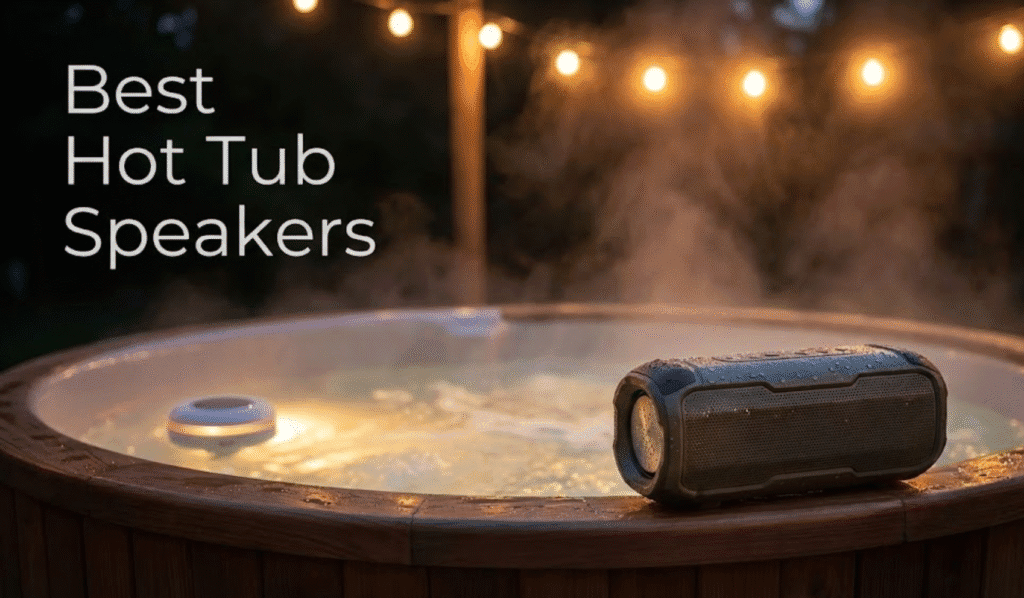

Looking to level up your soak sessions with waterproof sound that can handle splashes, float when you need it to, and still deliver clear, full music without breaking the bank?
Hot tubs turn ordinary evenings into pure bliss, but nothing elevates that bubbling escape like the right speaker setup. You slip into warm jets, hit play on your favorite playlist, and suddenly every soak feels like a private concert.
The challenge is finding speakers that actually survive moisture, deliver quality sound through steam and splashes, and fit your specific setup whether you want something portable or permanently mounted.
This guide rounds up the top speakers that hold up in and around hot tubs.
As you compare options, aim for at least an IPX7 or IP67 rating if there’s any chance of splashes or accidental dips. From there, it’s about the extras you’ll actually use, like 360-degree sound, subtle LEDs, or the ability to link two speakers for true stereo.
Quick Picks: Best Hot Tub Speakers at a Glance
| Model | Water Rating | Battery Life | Key Features | Best For | Price |
|---|---|---|---|---|---|
| JBL Boombox 4 | IP68 | 34 hours | Loud output, floats, app EQ | All-week battery, parties | $$$ |
| Bose SoundLink Flex (2nd Gen) | IP67 | 12 hours | Floats, PositionIQ tech | Portable, travel-friendly | $$ |
| UE Wonderboom 4 | IP67 | 14 hours | Compact, 360-degree Sound, Outdoor Boost mode | Solo soaks, tight budgets | $ |
| Anker Soundcore Select 4 Go | IP67 | 20 hours | Submersible, loop handle | Compact and portable | $ |
| JBL Charge 6 | IP68 | 28 hours | Power bank feature, strong bass | Small group settings | $$ |
| JBL PartyBox Stage 320 | IPX4 | 18 hours | Multiple JBL Auracast-enabled PartyBoxes can be connected wirelessly using Auracast | Audiophiles, multi-room setups | $$$ |
Disclosure: As an Amazon Associate I earn from qualifying purchases at no extra cost to you.
Top Hot Tub Speakers in 2026
1. JBL Boombox 4
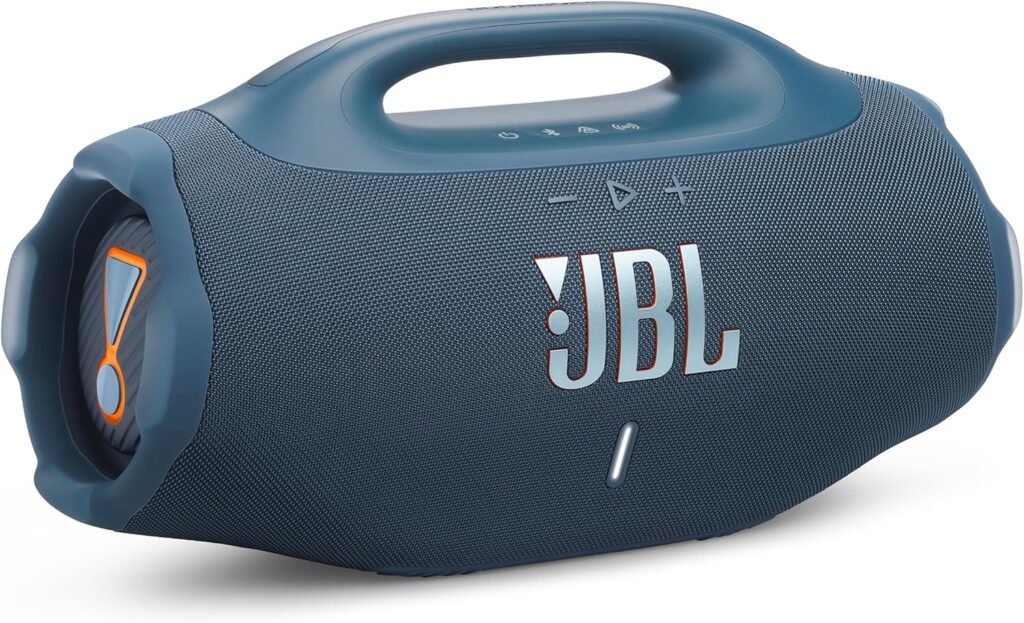
This heavy-duty portable speaker delivers the loudest clean sound in this roundup and floats reliably when you want it centered in the tub. The IP68 rating means it survives full submersion up to 30 minutes, though you’ll mostly use it sitting on the deck edge where it pumps music loud enough to hear over jets running at full blast.
Battery life reaches 34 hours on moderate volume, which translates to a full week of evening soaks without hunting for a charger. The JBL Portable app lets you adjust EQ settings, so you can boost treble for vocal clarity or drop bass if it overwhelms conversation.
Link: JBL Boombox 4 on Amazon
2. Bose SoundLink Flex (2nd Gen)
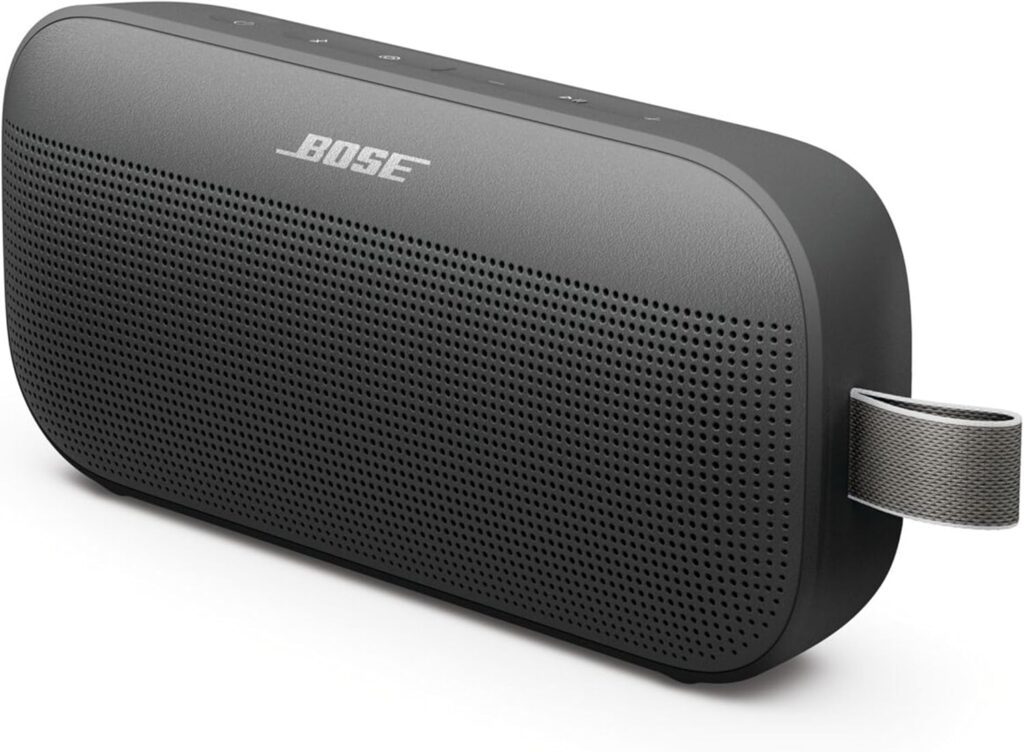
Compact enough to toss in a beach bag yet tough enough for regular hot tub use, this IP67-rated speaker floats and shrugs off both dust and water. PositionIQ technology detects the speaker’s orientation and optimizes sound output, so it maintains clarity whether floating upright or lying on its side after someone bumps it.
Battery provides 12 hours of playback at moderate volume. You can pair two units for stereo separation, though most solo soakers find one sufficient. The silicone exterior comes in several colors, and the compact size means it stores easily indoors during harsh weather.
Link: Bose SoundLink Flex on Amazon
3. Ultimate Ears Wonderboom 4
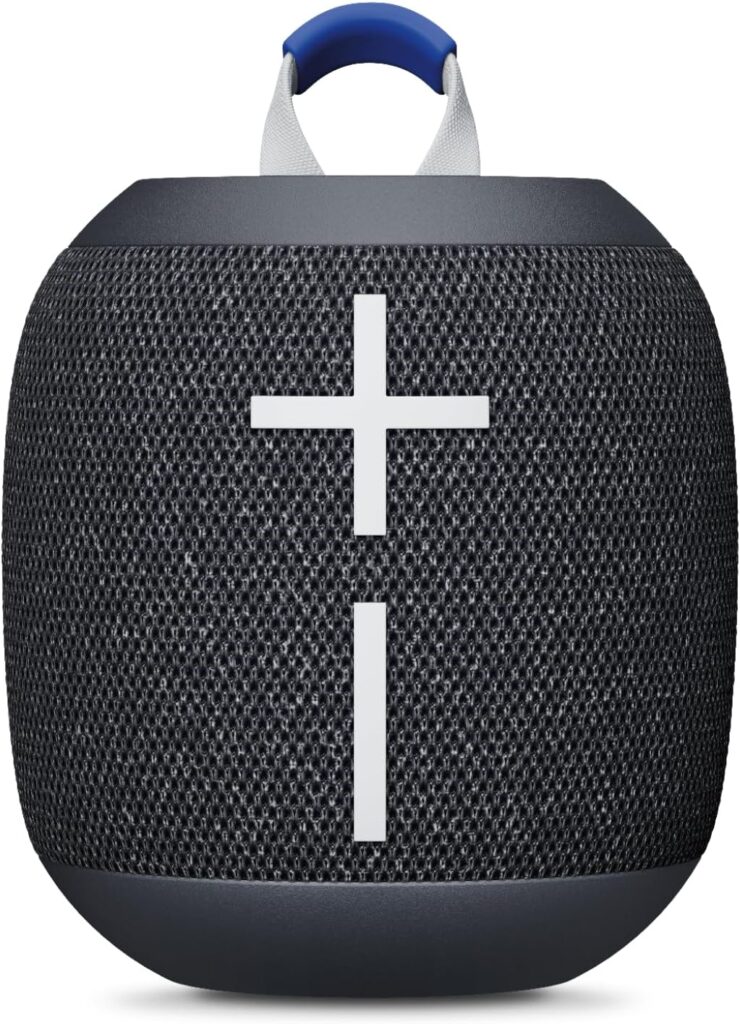
This compact speaker delivers solid value with IP67 floating protection, 360-degree sound, and 14-hour battery life. The small size makes it easy to grab from a side table and position wherever you want it.
Outdoor Boost mode enhances treble to cut through wind and water noise, keeping vocals crisp even with jets running full blast.
A built-in loop lets you attach it to towel hooks or pool bags for transport. Sound quality surprises people who expect cheap audio at this price point. It handles the basics well without trying to compete with speakers costing three times more.
Link: UE Wonderboom 4 on Amazon
4. Anker Soundcore Select 4 Go
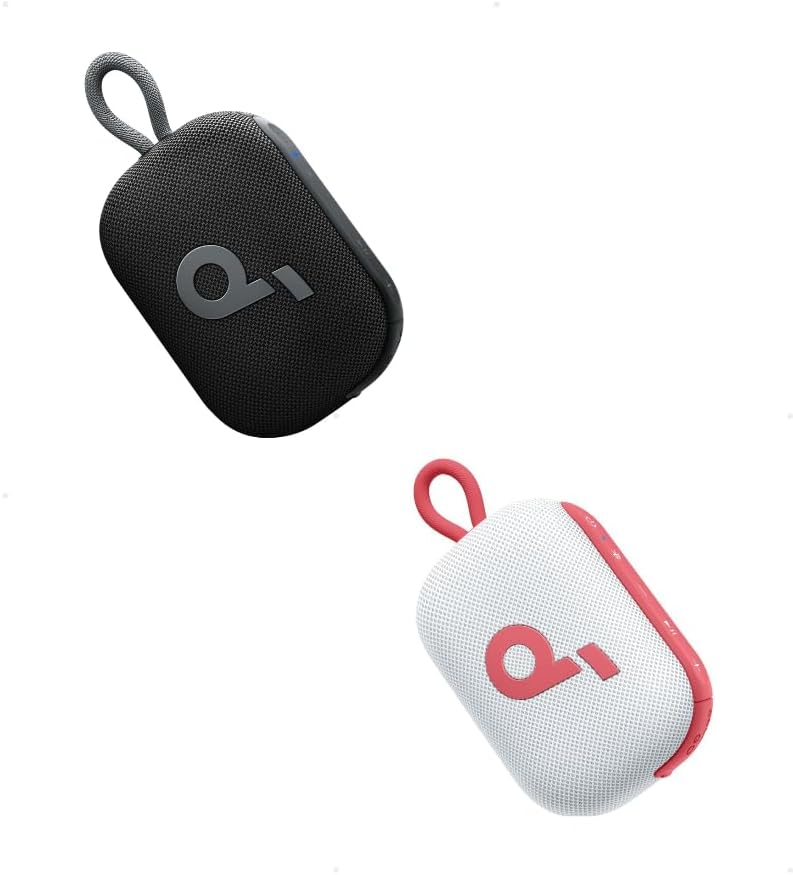
The cheapest option worth considering, this IP67-rated speaker handles full submersion while delivering decent bass for its size. Battery lasts 20 hours per charge, enough for several evening sessions before needing a top-up. The attached loop makes it easy to hang from pergola hooks or carry with a finger.
Bluetooth 5.3 pairs quickly with your phone from up to 100 feet away, though walls and steam can reduce that range. Sound quality won’t impress audiophiles, but it gets the job done for casual listening without breaking your budget.
Link: Anker Soundcore Select 4 Go on Amazon
5. JBL Charge 6
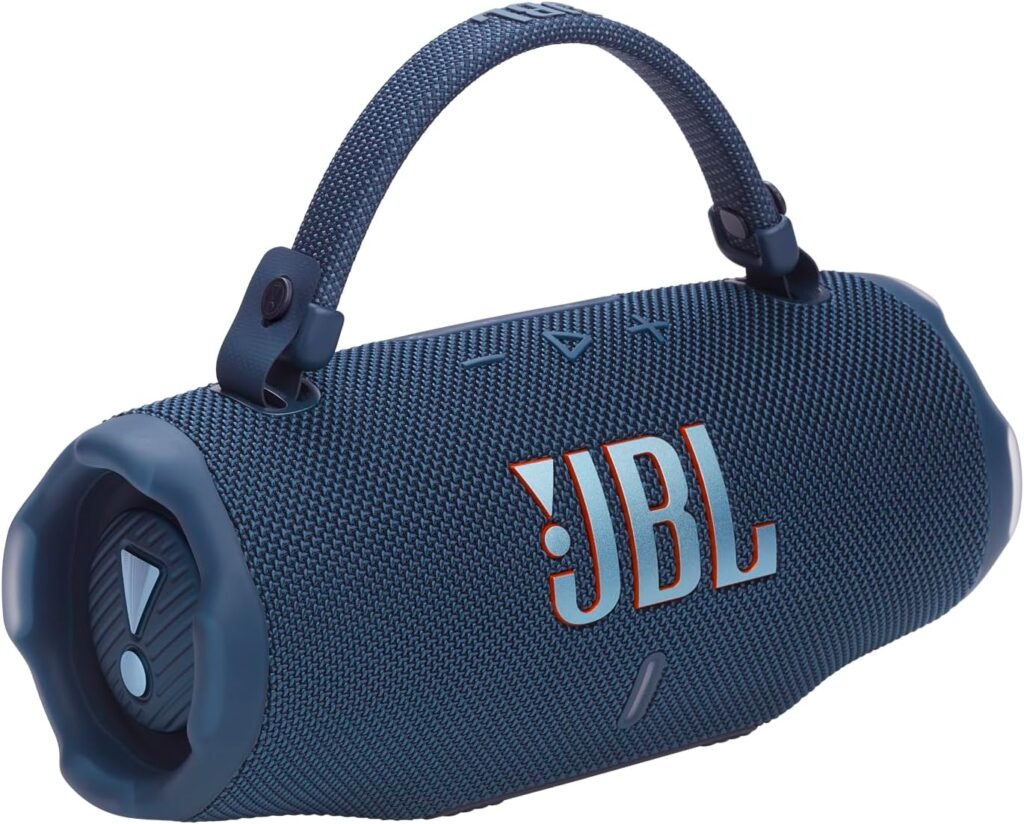
This cylindrical speaker combines IP67 water resistance with power bank functionality, letting you charge your phone while streaming music. It delivers 28 hours of playback with emphasized bass that really thumps. The rugged build handles drops on concrete and splashes without complaint.
You can pair it with other JBL speakers for expanded sound across your patio. The integrated carrying handle makes transport simple between tub, deck, and indoor storage during winter.
Link: JBL Charge 6 on Amazon
6. JBL PartyBox Stage 320
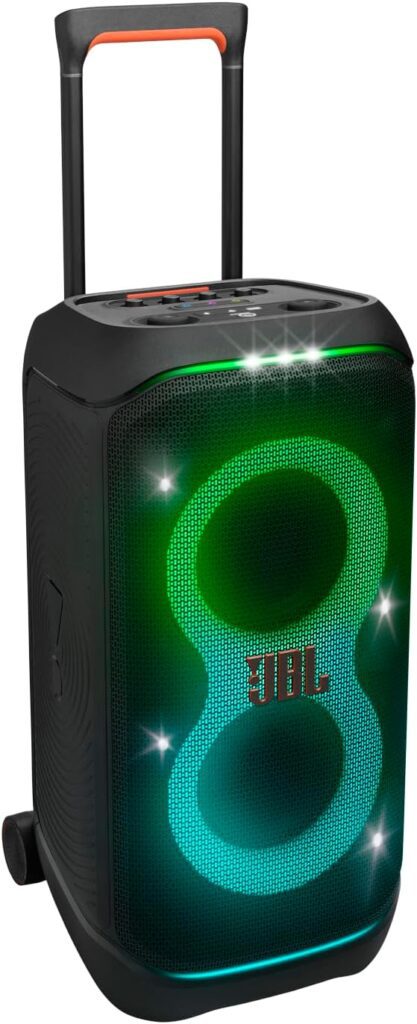
This party beast delivers IPX4 splash resistance with absolutely massive volume output suitable for backyard gatherings. Battery lasts 18 hours, and it includes mic and guitar inputs for karaoke or live music during hot tub parties. It also has a built-in light show that syncs to the beat.
The app provides full EQ control to dial in your preferred sound profile. At its price and weight, you’ll want to position this on stable ground near your tub rather than floating it.
It’s overkill for solo relaxation but perfect for hosting.
Link: JBL PartyBox Stage 320 on Amazon
How to Choose the Right Hot Tub Speaker
Most people make this harder than it needs to be, then end up paying for features they barely touch. Here’s what to look for, based on how you’ll use your hot tub speaker.
Water Protection That Handles Steam
IP ratings are tested in cool, fresh water, not in a steamy 104°F tub. As a quick guide, IPX7 means it can handle being dunked up to 1 meter for about 30 minutes. IP67 adds dust protection, and IP68 usually means it can handle deeper or longer submersion (the exact depth and time varies by brand).
The catch is that none of these ratings are testing hot steam or spa chemicals. Heat, humidity, and chlorine or bromine can wear speakers down over time, especially around adhesives, buttons, and seals.
If you’re buying for hot tub use, aim for IP67 or IP68. Skip IPX4 and IPX5 models because they basically only handle splashes and will fail when exposed to steam and full water contact regularly.
Bluetooth Range in Real Conditions
Manufacturers claim 100-foot Bluetooth range, but walls, glass doors, and steam cut that significantly. If your phone sits inside on a kitchen counter while you soak outside, expect range to drop to 40 to 50 feet maximum.
Bluetooth 5.0 or newer provides better stability than older versions. WiFi-capable speakers eliminate range concerns entirely, though they cost more and require network setup.
Test your speaker’s range before your return window closes. Walk your phone around your typical spots to verify connection holds where you actually use it.
Battery Life and Charging Frequency
Battery estimates are usually based on moderate volume in ideal conditions. In the real world, especially outdoors with jets running, you’ll often get less. Cranking the volume drains the battery much faster than you expect.
Budget speakers claiming 10 hours usually provide 7 to 8 hours of actual use. Premium options like the JBL Boombox 4 deliver closer to their 40-hour claims because they use higher-quality battery cells.
Cold weather reduces battery performance. If you soak year-round in northern climates, budget for 20% less battery life during winter months. Always charge speakers fully before extended sessions.
Volume That Overcomes Jet Noise
Hot tub jets produce 70+ decibels of noise. Built-in tub speakers often max out at 60 to 65 decibels, which means you can’t hear them clearly when jets run.
Look for speakers rated 85+ decibels at 1 meter minimum for outdoor and pool use. Smaller speakers physically can’t produce the same volume as larger ones. A 3-inch driver won’t match a 5-inch driver regardless of wattage claims.
Bass disappears faster outdoors than treble. Speakers with “Outdoor Boost” or similar modes enhance higher frequencies to cut through ambient noise better than indoor-tuned models.
Mounting and Placement Options
Hot tub edges aren’t flat like a table. They’re rounded, sloped, and often wet. That’s why suction mounts usually disappoint, they lose grip in humidity and heat and tend to fail over time.
Speakers with loops, clips, or a stable base are easier to live with. Some models also have optional brackets that work well on pergola posts or deck rails.
If you’re looking at a floating speaker, check that it floats upright with the sound facing up. Some floating speakers bob sideways, which looks fun but sounds worse. Reviews that mention how it actually floats are more useful than the spec sheet.
What Multi-Speaker Pairing Is Really Like
“Party mode” sounds great, but it rarely works the way the ads suggest. The more speakers you connect, the more likely you’ll run into small delays, dropouts, or audio that drifts slightly out of sync. Most setups are smooth with two speakers (true left and right stereo). Past three or four, it can get finicky fast.
Pairing is easiest when you stick to one brand and use its app. Mixing brands almost never plays nicely, even if everything is Bluetooth.
If you want sound across multiple outdoor areas and you care about everything staying in sync, WiFi systems usually do it better than Bluetooth. The tradeoff is price, plus a bit more setup.
Using Hot Tub Speakers in Cold Weather
Cold temps are rough on portable speakers. Lithium batteries don’t hold charge as well when it’s freezing, and a speaker left outside overnight can be sluggish to power on or refuse to turn on at all once temperatures drop around 32°F (0°C).
The bigger issue is freeze and thaw. Any moisture sitting in a charging port or around buttons can expand when it freezes, which can stress the seals, crack plastic over time, and speed up corrosion. After each use, wipe the speaker down, let it dry fully, and don’t store it in an unheated shed or outside where it can freeze.
If you soak through winter, the simplest move is to treat your speaker like a towel. Bring it out when you use the tub, then take it back inside afterward.
Conclusion
Most people find that portable Bluetooth speakers work better for hot tubs than built-in systems. They’re easier to replace when something goes wrong, and you can bring them indoors during harsh weather or winter months. If a portable speaker fails after a few years, you’re out $50 to $200 instead of hundreds for integrated repairs.
The key is matching the speaker to how you actually use your tub. If you soak every evening, battery life is more important more than maximum volume. If you host weekend gatherings, loud output and multi-speaker pairing become more important. For solo relaxation sessions, a compact option that’s easy to grab and charge tends to work better than something bulky.
One thing to keep in mind is that waterproof ratings test cold water, not steam. Look for IP67 or IP68 ratings at minimum, and plan to rinse your speaker with fresh water after use to protect it from chlorine or bromine exposure. Even well-rated speakers benefit from being stored indoors between sessions rather than left permanently outside.
Many people overthink this decision and end up paying for features they rarely use. A simpler speaker you actually charge and position correctly will serve you better than a complicated one that sits dead on a shelf. Start with what fits your budget and usage pattern, then upgrade later if your needs change.
Frequently Asked Questions
What’s the minimum IP rating I should look for in hot tub speakers?
Aim for IPX7 or IP67 at minimum. IPX7 means the speaker survives submersion in water up to 1 meter for 30 minutes. IP67 adds dust protection, which matters for outdoor use where pollen and debris accumulate. Lower ratings like IPX4 only handle splashes and won’t survive accidental dunking or prolonged steam exposure.
The first digit in IP ratings addresses dust protection, where 6 means dust-tight. The second digit covers water resistance, where 7 handles temporary submersion and 8 goes deeper. Some premium models like the JBL Boombox 4 offer IP68 for extended water contact tolerance.
Do hot tub speakers actually float, or will they sink?
Many portable speakers designed for water use float by design, but performance varies significantly. Cylindrical models with sealed chambers like the JBL Boombox 4 and UE Wonderboom 4 float reliably with speakers facing up. Orientation matters more than just whether it floats at all.
Some speakers float but tip to odd angles, pointing sound the wrong direction. Others float initially but sink as water seeps into ports over time. Check user reviews specifically mentioning floating stability before assuming any waterproof speaker will bob correctly in your tub. Built-in mount speakers obviously don’t float since they install permanently into your spa structure.
How long do batteries actually last during real-world hot tub use?
Manufacturer claims assume moderate volume in ideal conditions. Real-world use typically delivers 70% to 90% of stated battery life depending on how you use the speaker. Playing music at maximum volume drains batteries faster, as does maintaining Bluetooth connection across longer distances or in areas with interference from WiFi routers and other devices.
Can I pair multiple speakers for surround sound around my hot tub?
Most modern Bluetooth speakers support pairing features under names like TWS (True Wireless Stereo), PartyBoost, or proprietary app-based systems. You can position one speaker on each side of your tub for stereo separation with distinct left and right channels. Brands like Ultimate Ears, JBL, and Bose make pairing straightforward through their mobile apps.
Verify both speakers are the same model or at least from compatible series within the same brand. Mixing brands rarely works because they use different pairing protocols. Stick to one manufacturer if you plan to build a multi-speaker setup. Expect slight audio delay if speakers aren’t specifically designed to sync, and performance typically degrades beyond three or four connected units.
How do I protect speakers from chlorine and spa chemicals?
While IPX7+ ratings resist water, spa chemicals slowly degrade seals and housing materials over time. Rinse speakers with fresh water after each use, especially if using chlorine or bromine sanitizers. Dry them thoroughly before storing indoors to prevent moisture trapped in ports from corroding electronics.
Speakers designed for saltwater use like the Anker Boom 3i include extra coating protection against corrosive environments. Avoid leaving speakers floating for hours while shocking your spa or adding concentrated chemicals. Store them away from the tub during maintenance. Replace speakers showing cracked seals or distorted sound, as water intrusion accelerates once protective barriers fail.
Will steam and humidity damage Bluetooth speakers over time?
Steam itself won’t immediately damage properly rated speakers, but prolonged exposure to high humidity environments accelerates wear on seals, buttons, and internal components. IP67+ speakers handle steam better than lower-rated models, though no rating specifically tests for hot steam exposure.
After use, wipe speakers dry and store in climate-controlled areas rather than leaving them permanently mounted near your hot tub. Speakers left outside year-round experience faster degradation than those stored indoors between uses. Marine-grade permanent mounts specifically account for constant humidity, while portable Bluetooth models benefit from breaks in dry conditions. Inspect seals annually for cracks or loosening that indicate replacement time.