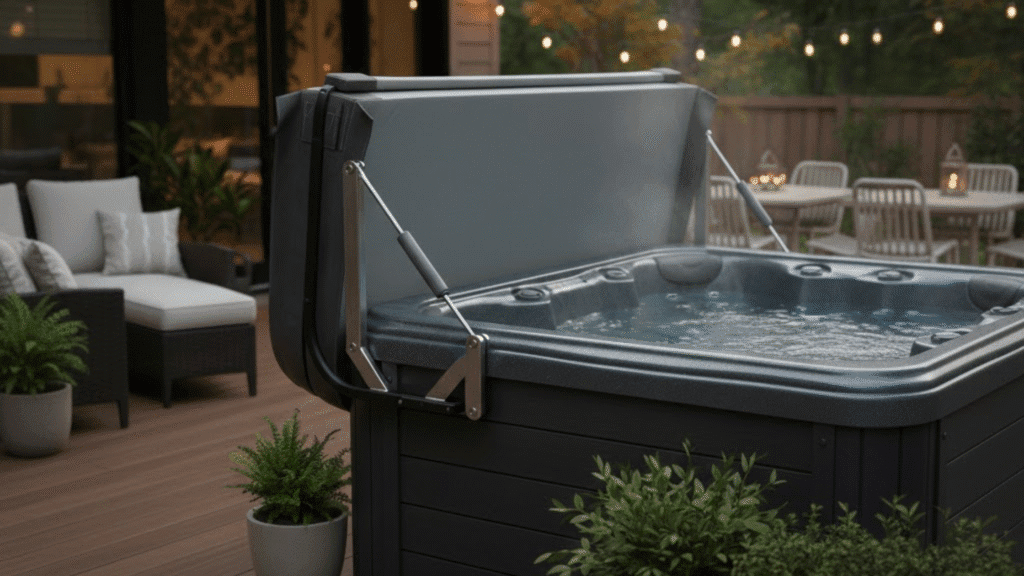

If you’re wrestling with a heavy hot tub cover every time you want to soak, it might be time to consider a hydraulic hot tub cover lifter.
The right cover lifter takes the struggle out of opening your spa, so you’re not straining your back, hunting down help, or skipping a soak because the cover feels like a workout.
Whether you’re dealing with a waterlogged cover, tight clearance behind your spa, or just want something that won’t rust out in three winters, these top picks can help with simple one-person operation.
Quick Picks: Best Hydraulic Hot Tub Cover Lifters at a Glance
These hydraulic lifters handle the weight so you can operate your cover with minimal effort.
| Model | Best For |
|---|---|
| ACTREY Undermount | No-drill installation |
| Utheer Heavy-Duty | Adjustable sizing |
| Cover Guy Hydraulic | Minimal clearance |
| REGMICS Hydraulic | Round/odd shapes |
Disclosure: As an Amazon Associate I earn on qualifying purchases at no extra cost to you.
Best for No-Drill Installation- ACTREY Undermount Hydraulic Lifter
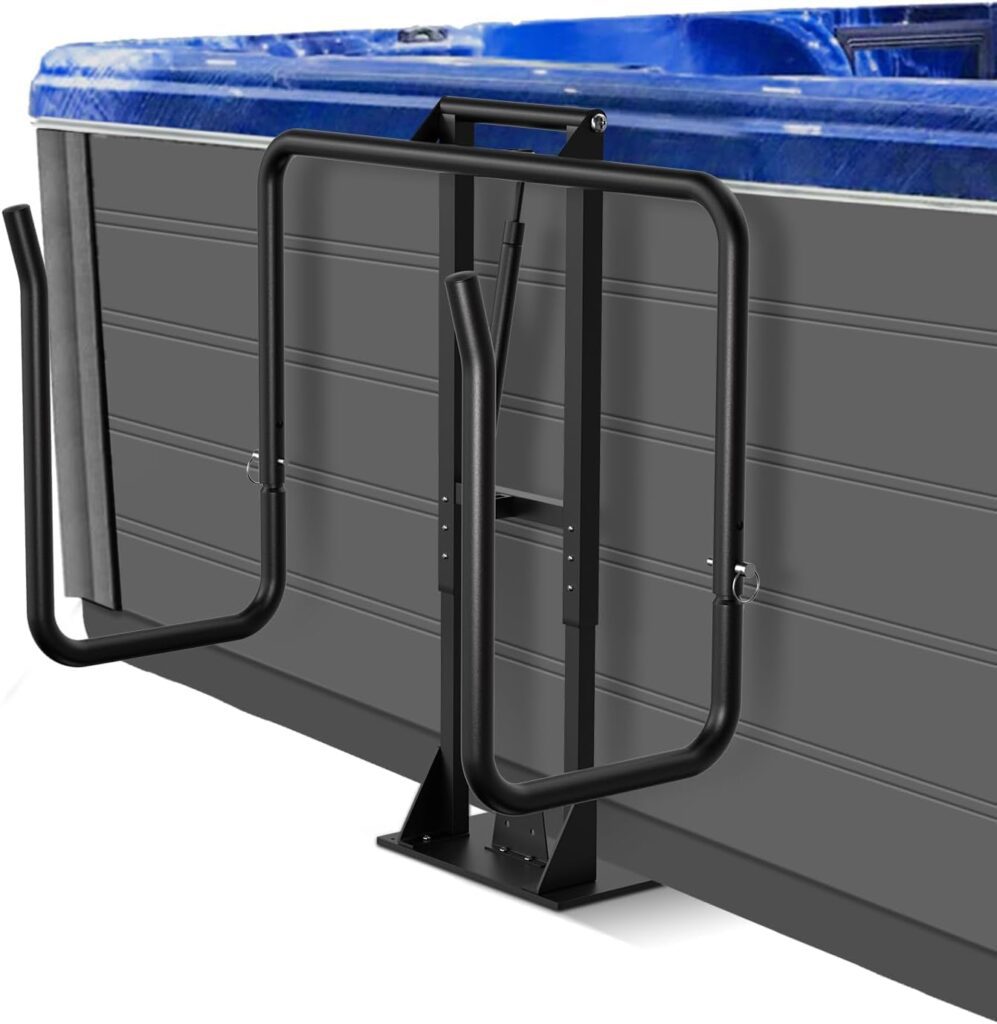
The ACTREY undermount cover lifter is made for hot tub owners who want lift assistance without the worry of drilling into the spa cabinet or shell. Instead of side-mount brackets, the base plate slides under the tub and the uprights anchor to the deck surface, which helps avoid the kind of modifications that can make people nervous about warranties.
It still uses hydraulic gas struts, so the lifting feel is similar to a traditional mounted lifter, just with less installation risk. The powder-coated steel frame is also built to handle outdoor exposure, so it holds up well against rain, sun, and general weather wear.
The main trade-off is installation. You’ll need to drain the tub to slide the plate into place, and you’ll want to confirm you have the space for it to operate smoothly.
The frame adjusts from about 25 to 39 inches high, fits tubs up to 96 inches wide, and needs roughly 36 inches of clearance behind the spa for the cover to fold and move freely.
Pros
- No drilling protects spa warranty coverage
- Hydraulic gas struts handle heavy cover weight
- Works with square, octagonal, and round spa shapes
- Adjustable height fits various tub dimensions
- Removable if you need equipment panel access
Cons
- May need shifting/lifting/draining the tub for initial installation
- Needs 36 inches of clearance behind the spa
- More expensive than basic pivot lifters
- Gas struts may weaken faster with very heavy waterlogged covers
Best for
- New tub owners worried about voiding manufacturer coverage
- Non-handy buyers who want to avoid drilling risks
- Spas with non-standard shapes that limit other options
- Situations where future equipment access is a consideration
Best for Adjustable Sizing – Utheer Heavy-Duty Hydraulic Assist Lifter
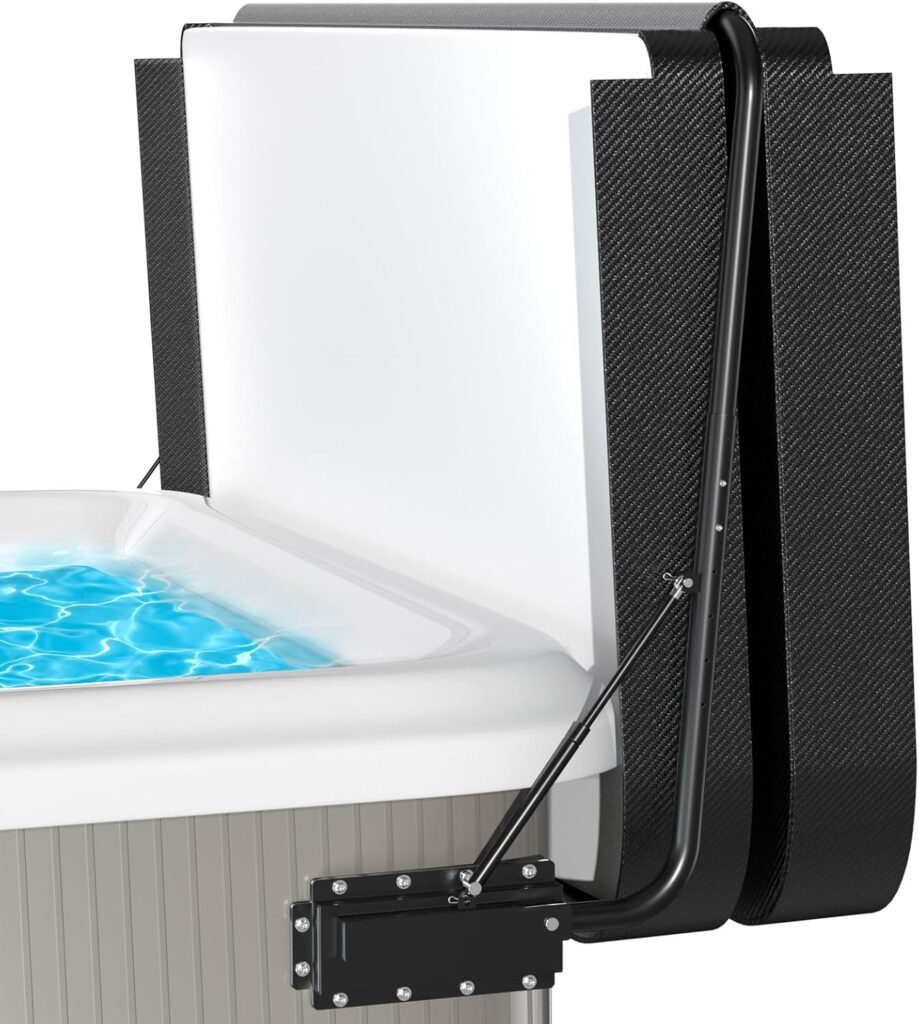
The Utheer cover lifter is a heavy-duty, bracket-mounted system designed for standard rectangular hot tubs up to 96 inches wide. It uses an adjustable setup (height, width, and bracket angle) so you can tune the fit to your specific spa and cover, which is helpful when dimensions aren’t perfectly standard.
This model installs with a two-side, top-mount bracket design, and it’s meant to work in tighter setups than many rear-shelf styles. It requires about 10 to 15 inches of clearance behind the spa, plus 5 inches on each side, so it can operate without binding.
Build-wise, it’s made from powder-coated steel for rust and corrosion resistance, and it supports corner radii up to 10 inches. Just note that it’s not intended for round, hexagon, octagon, or in-ground spas.
Pros
- Adjustable height, width, and bracket angle for a more dialed-in fit
- Fits rectangular hot tubs up to 96 inches wide
- Powder-coated steel construction for corrosion and rust resistance
- Works with relatively modest clearance requirements (10–15 inches behind, 5 inches per side)
Cons
- Not suitable for round, hexagon, octagon, or in-ground spas
- Limited to corner radii up to 10 inches
- Still a bracket-mounted install
Best for
- Owners with rectangular tubs needing adjustable fit options
- Setups with moderate space behind the spa (around 10–15 inches)
- Buyers who want a steel frame with a weather-resistant finish
Best for Minimal Clearance – Cover Guy Hydraulic Cover Lifter
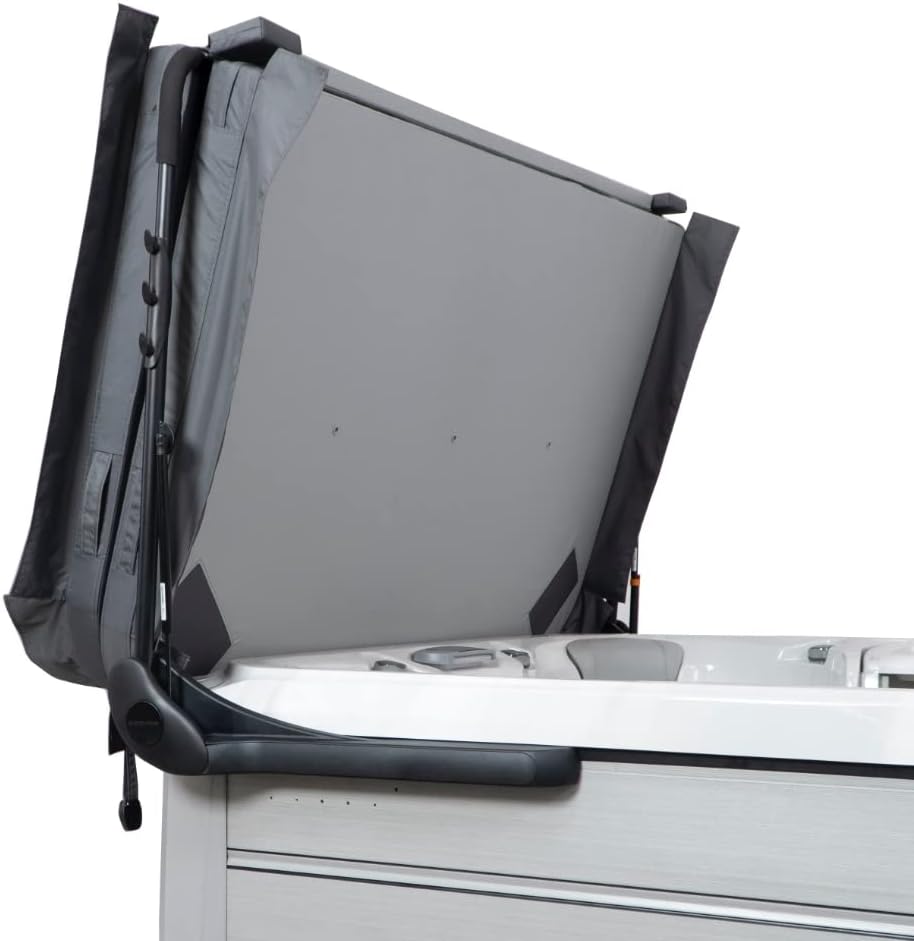
The Cover Guy hydraulic model works in tighter deck spaces than most gas-assisted lifters. It requires minimal clearance behind the tub, which is helpful when your spa sits close to a wall or fence.
The corrosion-resistant gas shocks provide lift assistance that reduces the effort needed to manage heavy covers.
The aluminum frame is another practical win for outdoor setups, since it tends to handle weather exposure better over time than steel frames that can eventually rust.
Mounting is flexible, too. You can install it on the high side or the top of the tub depending on your layout.
Small details like rubber grip handles and towel hooks make it nicer to live with day to day, and the gas shocks help the lift feel smoother and more controlled, especially through those angles where the cover usually feels heaviest.
Pros
- Works in tight deck layouts with limited rear clearance
- Gas shocks reduce physical effort for aging or mobility-limited owners
- Aluminum brackets resist rust from moisture and weather exposure
- Towel hooks provide convenient storage during soak sessions
- Fits rectangular tubs from 72 to 96 inches
Cons
- Requires drilling into the cabinet/skirt panels for secure mounting
- Not suitable for round or octagonal spa shapes
- Gas shocks will eventually need replacement after years of use
Best for
- Deck layouts where space behind the tub is restricted
- Owners who need hydraulic assist without extensive clearance
- Tubs positioned against fences or walls
- Buyers willing to drill for a secure mount
Best for Round and Odd Shapes – REGMICS Aluminum Hydraulic U-Shaped Spa Cover Lifter
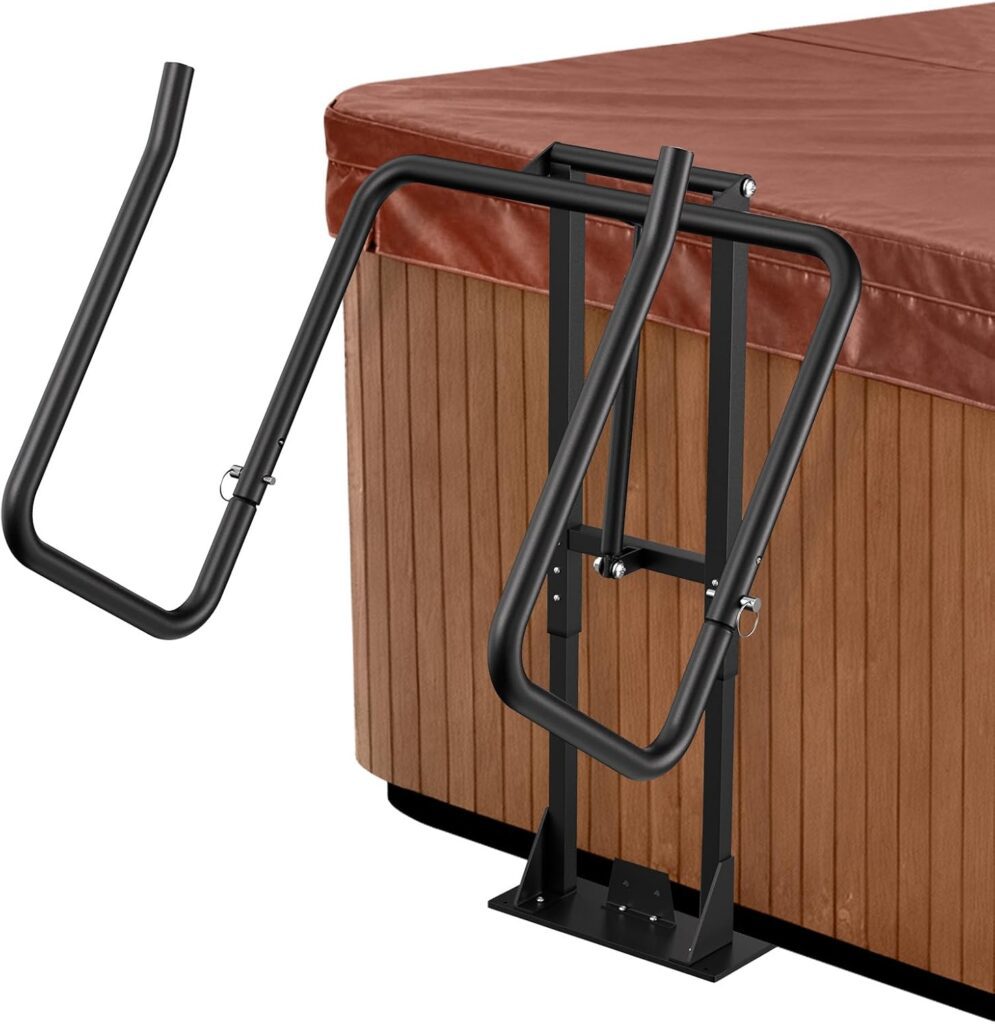
Most hydraulic cover lifters are built around rectangular spas, which can make round or odd-shaped tubs a headache. The REGMICS hydraulic undermount is designed to get around that, using a U-shaped base that slides under the spa so it can work with round, octagonal, and other non-standard shapes.
It uses gas-assisted hydraulics to take the weight out of lifting, and because it’s an undermount style, you get that lift support without drilling into the shell. The frame height adjusts from about 25 to 39 inches, so you can match it to different spa profiles and cover thicknesses.
One of its strong suits is the clearance flexibility. You can operate it from behind the spa if you have around 48 inches of space, or lift from inside the spa area with closer to 30 inches of clearance.
It’s built from a mix of aluminum and steel to keep it sturdy but not overly heavy, with materials that handle outdoor conditions well. Fit-wise, it’s designed for tub widths roughly in the 72 to 105 inch range.
Pros
- Works with round, square, octagonal, and rectangular shapes
- Hydraulic gas assist reduces lifting effort significantly
- No drilling required, protecting warranty coverage
- Flexible installation angles for different deck layouts
- Accommodates wider range of tub sizes than most lifters
Cons
- Requires draining tub to install base plate under unit
- Needs substantial clearance depending on lift direction
- Higher price point than manual pivot alternatives
- Undermount design limits access to equipment panels
Best for
- Owners of round or octagonal hot tubs with few lifter options
- Non-standard tub shapes that can’t work with traditional lifters
- Deck layouts with unusual clearance constraints
- Buyers who need warranty-safe installation for odd shapes
How to Use Hydraulic Cover Lifters for Your Hot Tub
Using your lifter properly extends its lifespan and prevents the shock failure that ruins so many cheaper systems.
Before your first use, verify the shocks are fully decompressed and your cover sits properly in mounting brackets. Lift from outside the tub rather than inside—lifting from inside creates uneven stress on pivot points that leads to bent arms and broken brackets.
Guide the cover gently. Hydraulic systems work with controlled assistance, not aggressive forcing. If you’re shoving and wrestling, something’s misaligned.
In windy areas, secure the open cover. Violent slamming damages shocks and brackets faster than anything else. Coastal or high-wind region owners often add wind straps or ratchet tie-downs. After heavy snow, clear accumulation before operating—don’t force the system to lift waterlogged weight it wasn’t designed for.
Annual inspection catches problems early. Check for rust spots, loose hardware, or gas shocks losing tension. Tighten bolts seasonally, especially after temperature swings. Most manufacturers sell replacement shocks (about $60-95 each), making repair more economical than full replacement when only the gas springs fail.
Choosing the Right Hydraulic Lifter: Clearance, Climate & Cover Weight
- Clearance measurements come first. Clearance comes first, but the right number depends on the lifter style. Some tight-clearance designs can work with roughly a foot of space behind the spa, while other pivot and shelf-style lifters may need closer to two feet or more to fold and rest the cover properly. Always measure from the back edge of the spa to the nearest wall or fence, then compare that number to the manufacturer’s clearance requirement for the exact lifter you’re considering.
- Climate determines material choices. Coastal owners and heavy snow regions need powder-coated aluminum or galvanized steel. Freeze-thaw cycles and salt exposure corrode lower-grade finishes fast. Basic coatings can rust within 2-3 years in harsh conditions, while premium corrosion-resistant models last 10+ years in the same environments.
- Cover weight drives shock strength requirements. Cover condition and extra load determine how hard the lifter has to work. A standard, dry cover is what most lifters are designed around. If your cover is waterlogged or you’re trying to open it with snow sitting on top, the added weight can overwhelm the assist and accelerate wear — in those cases, clear the snow first and consider replacing a waterlogged cover rather than expecting the lifter to compensate. And if the gas struts start losing pressure, the cover may not stay supported and can drift down or drop, which is a sign it’s time to service or replace the struts.
- Installation preference matters. No-drill, under-mount lifters are a good fit if you’re worried about warranties or just don’t want to put holes in your spa cabinet. Side-mount lifters usually do require drilling, but they can be easier to line up and adjust. Either way, be honest about your DIY comfort level—some designs demand precise measurements that frustrate DIY attempts.
- Budget calculations beyond upfront cost. Entry-level lifters ($120-200) might need replacement every 3-5 years. Premium options ($400-700) often last 10+ years with warranty coverage. Calculate cost-per-year rather than sticker shock. A $600 lifter lasting 12 years costs $50/year; a $150 lifter replaced every 3 years costs the same long-term with more installation hassle.
Final Recommendation
A hydraulic cover lifter can be the difference between using your hot tub regularly and skipping it because opening the cover feels like a chore. Gas-shock assisted models take on most of the load, so a cover that weighs roughly 60 to 80 pounds becomes something you can lift and fold back on your own, without the awkward strain.
The key is choosing the style that fits your setup. True gas-shock hydraulic lifters give noticeably more help than basic pivot designs, even the reinforced ones. If you’re worried about drilling into the cabinet or affecting warranty coverage, an undermount lifter is the safer route. And if your spa is round or octagonal, shape compatibility matters more than saving a few dollars, because many lifters simply won’t fit properly.
Once the gas shocks are doing the heavy lifting, the cover stops being the hardest part and goes back to what it should be: a quick step before you get in and relax.
Frequently Asked Questions
Do hydraulic lifters void hot tub warranties (U.S.)?
In the U.S., companies generally can’t void warranty coverage solely because you used a third-party part or accessory. However, they can deny a specific repair if they can show the damage was caused by the installation or modification itself. If you want to minimize any risk, undermount designs avoid drilling into cabinet panels altogether.
How long do gas shocks last in hydraulic lifters?
How long gas shocks last in hydraulic lifters varies with cover weight, weather exposure, and how often you use the tub. Many owners get several years out of gas shocks, but heavy covers and harsh climates shorten the lifespan. When shocks do weaken, replacements are usually available from most manufacturers.
Can hydraulic lifters handle waterlogged covers?
Hydraulic (gas-assist) lifters can make a heavy cover easier to move, but a waterlogged cover often becomes heavier than most lifters are designed for and can accelerate wear or lead to sagging/unsafe operation. If your cover is waterlogged, the foam core has absorbed water and it’s usually time to replace the cover rather than relying on a stronger lifter to compensate. A lifter can help prevent future stress on a healthy cover, but it can’t reverse water absorption that’s already happened.
What clearance do I need behind my hot tub?
Side-mount lifters require 18-24″ of rear clearance for the cover to fold and rest properly. Undermount designs need 6-14″ depending on model. Measure from your spa’s back edge to the nearest wall, fence, or obstacle. Account for cover thickness when folded—a 4″ thick cover becomes 8″ folded, affecting actual space needed.
Are aluminum or steel lifters better?
Aluminum offers superior corrosion resistance and lighter weight but costs more. Galvanized or powder-coated steel provides excellent strength at lower prices. For coastal or snowy climates, aluminum or galvanized steel with powder coating performs best. Protected installations under gazebos can use standard steel with protective finishes. Skip lifters with exposed bare metal or plastic structural components—they fail fast.
Health & Safety Notice: Cover lifters reduce physical strain but don’t eliminate the need for caution. Always ensure lifters are properly installed and maintained. Consult a healthcare provider if you have mobility concerns or medical conditions affecting your ability to operate spa equipment safely.