
Hot tubs are synonymous with relaxation and rejuvenation, offering a perfect escape from the stresses of everyday life.
However, ensuring a safe and inviting experience in your hot tub goes beyond just filling the tub with water.
One crucial element that often goes unnoticed is the management of hot tub chlorine levels.
Chlorine plays a vital role in keeping your hot tub water clean and free from harmful bacteria.
In this article, we will delve into the importance of maintaining proper chlorine levels, share expert tips on how to test and adjust these levels, highlight common mistakes to avoid, and provide insights into maintaining balanced water chemistry for a safe and enjoyable spa experience.
Disclosure: As an Amazon Associate I earn on qualifying purchases at no extra cost to you.
Quick Answer: What Is a Safe Hot Tub Chlorine Level?
Public health guidance generally calls for at least 3 ppm free chlorine in chlorine-sanitized hot tubs. You should not soak when chlorine reads above 10 ppm. The upper end of your working range is set by your spa manufacturer’s recommendations and the sanitizer product label.
Test before each soak when possible, and at minimum several times per week. Shock the water based on your sanitizer system, product directions, and your test results.
Safe Hot Tub Chlorine Guide
Based on current public health guidance and your spa manufacturer’s range
TARGET: At least 3 ppm free chlorinefree chlorine
Always follow your spa manufacturer’s operating range and the directions on your sanitizer and shock product labels. Not medical advice.
Why Chlorine Is Non-Negotiable in a Hot Tub
Warm water plus organic contaminants from human bodies (sweat, oils, skin cells, sunscreen, deodorant residue) create conditions where bacteria can grow.
Hot tubs typically run at 100°F to 104°F, which is warmer than most swimming pools and more hospitable to pathogens like Pseudomonas aeruginosa, the bacteria associated with hot tub folliculitis, and Legionella, which has been linked to respiratory illness.
A properly sanitized spa helps in three ways:
- It reduces the risk of bacterial and viral growth in the water.
- It oxidizes organic waste like body oils, sweat, and cosmetic residue.
- It helps prevent biofilm from building up inside plumbing, jets, and the filter cartridge.
When free chlorine falls below the recommended minimum, these protections weaken and water quality can deteriorate, especially in heavily used or warm spas.
Safe Hot Tub Chlorine Levels
Free chlorine is the key number for hot tub sanitation.
Most public health guidance says hot tubs should maintain at least 3 ppm of free chlorine. The CDC also advises against soaking when chlorine levels are above 10 ppm.
Your spa manufacturer’s recommended range is the best place to start because it applies to your specific model. That said, most owners usually work within these general reference points:
- Below the recommended minimum: There is not enough active sanitizer in the water, so skip the soak until chlorine levels are back where they should be.
- Within your spa’s recommended operating range: Test the water regularly, stay consistent with maintenance, and enjoy your hot tub as usual.
- Above the recommended upper limit, and especially above 10 ppm: Do not enter. Wait for levels to come down, then retest the water before using the spa.
More chlorine does not mean safer water. Over-chlorinated water can irritate your skin and eyes, and it can also put extra strain on spa components. On the other hand, low chlorine levels do not do enough to control bacteria. The safest range is the middle ground where both problems are less likely.
Free Chlorine vs Combined Chlorine vs Total Chlorine
One of the most common water chemistry mistakes is mixing up these three numbers on a test strip.
- Free chlorine (FC) is active, unused sanitizer. This is the number that matters for sanitation and should stay within your spa’s recommended operating range.
- Combined chlorine (CC) is chlorine that has already bonded with contaminants. These compounds are called chloramines, and they’re often the source of the strong “chlorine smell” and skin irritation people blame on too much chlorine.
- Total chlorine (TC) is free chlorine plus combined chlorine added together. Basic test strips often only measure total chlorine, which is why upgrading to a test that reads free and combined separately gives you a more complete view of your water.
If total chlorine reads high but the water still smells chemical or irritates skin, combined chlorine is often the reason. The right shock treatment depends on your sanitizer system and test results, so follow the directions on your shock product and your spa manufacturer’s manual.
How to Test Hot Tub Chlorine Levels
Two reliable testing methods work for home use:
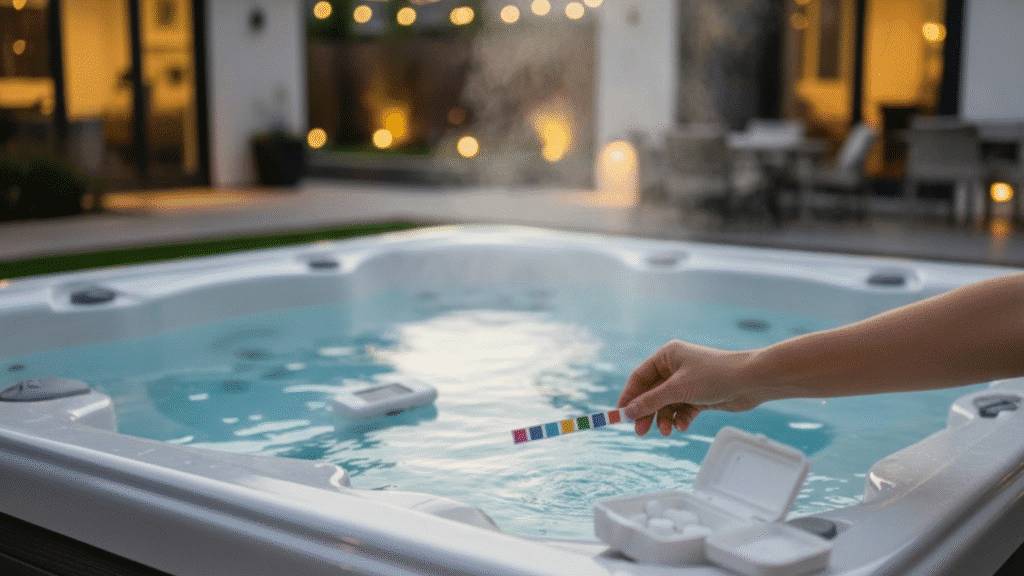
Test strips are the fastest option. Dip a strip, wait for the time listed on the bottle, and compare the color to the chart. Quality strips read free chlorine, total chlorine, pH, total alkalinity, and hardness in a single dip.
Recommended: AquaChek Select Connect 7-Way Pool and Spa Test Strips on Amazon
Liquid reagent kits use drops that react with a water sample in a vial. They are generally more accurate than strips and worth having when troubleshooting stubborn water problems.
Recommended: Taylor Service Complete Pool Water Test Kit K-2006C on Amazon
Testing Best Practices
- Pull the sample at elbow depth, not from the surface
- Test before adding any chemicals, never after
- Keep strips sealed and dry; humidity shortens their life
- Replace strips by the expiration date on the bottle
- Test when the water is calm, not right after the jets run
- Follow the product’s sample handling instructions for the most accurate readings
How to Raise Low Hot Tub Chlorine Levels
If free chlorine drops below your spa’s recommended minimum, sanitizer needs to go back in. Common options include:
- Spa-labeled chlorine granules, which dissolve quickly.
- Spa-labeled chlorine tablets (only use a tablet product if the label specifically approves spa use and your spa manufacturer allows it).
- Liquid chlorine products formulated for spa use.
Which sanitizer is right depends on your spa manufacturer’s guidance, current public health recommendations, and the product label.
Some chlorine products contain cyanuric acid as a built-in stabilizer. The CDC currently recommends against using cyanuric acid or chlorine products containing cyanuric acid in hot tubs, because cyanuric acid can slow how quickly chlorine kills bacteria at spa temperatures.
Before choosing a sanitizer, check the product label and your spa’s owner’s manual.
One widely available option is Leisure Time E5 Spa 56 Chlorinating Granules for Spas and Hot Tubs on Amazon. Before using any spa chlorinating granules, check your spa manufacturer’s guidance to make sure the product is compatible.
If your spa manufacturer and product label both allow tablet use, a dedicated floating dispenser or approved feeder is safer than dropping tablets directly into the tub, since direct contact can damage the spa surface.
Recommended: U.S. Pool Supply Pool Chlorine Floater Dispenser with Pop-Up Refill Indicator on Amazon.
However you sanitize, dose according to the product label and your spa volume, run the jets to circulate, and retest before soaking.
How to Lower High Hot Tub Chlorine Levels
Over-chlorinated water is usually easier to correct than under-chlorinated water. Common approaches:
- Remove the cover and let the spa sit uncovered. UV light from direct sunlight breaks down free chlorine over time. How long it takes depends on sun exposure, water temperature, and starting chlorine levels.
- Add a chlorine neutralizer (sodium thiosulfate based). Dose strictly by the product label and your spa’s volume. Overdosing neutralizer can leave the tub with no sanitizer at all, so retest before adding more.
- Do a partial water change. Drain and refill a portion of the tub with fresh water. This also helps dilute total dissolved solids that build up over time.
Do not soak in water above 10 ppm. Over-chlorinated water can cause rashes, eye irritation, and respiratory discomfort, especially for anyone with asthma or sensitive skin. Retest before entering.
The Weekly Hot Tub Chlorine Maintenance Schedule
A simple schedule that keeps water clean without turning maintenance into a chore:
- Daily: Quick visual check for water clarity and surface debris.
- Before each soak when possible: Test free chlorine and pH with strips. At minimum, test several times per week and adjust based on product directions and your spa manufacturer’s recommended ranges.
- Weekly: Shock the water based on your sanitizer system and test results. Many owners use a non-chlorine oxidizer (potassium monopersulfate, often labeled MPS) to help clear organic waste and chloramines, but the right shock product depends on whether you run chlorine, bromine, or a mineral system. Always follow the product label.
- Monthly: Rinse the filter cartridge per the manufacturer’s instructions and consider a full liquid kit test for a more accurate read across all parameters.
- Periodically: Drain, clean, and refill on the schedule listed in your spa manufacturer’s manual. Replace the filter cartridge when it looks worn or stops coming clean after a rinse.
What Affects Hot Tub Chlorine Levels
Chlorine gets used up faster than many owners expect. These factors draw sanitizer down:
- Bather load. More bathers means more sweat, body oils, skin cells, and cosmetic residue that chlorine has to deal with.
- Water temperature. Higher temperatures speed up chlorine breakdown.
- Sunlight exposure. UV degrades unstabilized chlorine. Keep the cover on between uses.
- pH imbalance. Chlorine efficiency drops when pH is outside the range recommended for your spa.
- Total alkalinity. Low alkalinity lets pH swing, which wastes chlorine.
- Calcium hardness. Too soft and components corrode; too hard and scale builds up and traps contaminants.
- Cyanuric acid. Some chlorine products include cyanuric acid as a UV stabilizer. Current CDC guidance advises against using cyanuric acid in hot tubs, because it can slow chlorine’s ability to kill bacteria. If your chlorine product contains it, follow manufacturer guidance on draining and refilling so levels don’t build up.
- Total dissolved solids. Elevated TDS can signal it’s time to drain and refill. Follow your manufacturer’s threshold.
- Rain, leaves, and pollen. Outdoor spas exposed to debris go through chlorine faster and benefit from more frequent shocking and filter rinsing.
The Full Water Balance Picture
Chlorine doesn’t work in isolation. Several other parameters affect how effective sanitizer actually is:
- pH: Keep within the range your spa manufacturer recommends. Common spa guidance falls within 7.0 to 7.8, and many owners aim for a midpoint in that range. Your manual is the final word.
- Total alkalinity: Common guidance falls in the 80 to 120 ppm range, though this can vary by spa and sanitizer system. Follow your product label.
- Calcium hardness: Common guidance falls in the 150 to 250 ppm range, with the exact target varying by spa.
- Cyanuric acid: Current CDC guidance does not recommend cyanuric acid in hot tubs.
Chasing a chlorine number while ignoring these other parameters tends to produce cloudy water and persistent irritation. Balance them together and your spa is much easier to care for.
Chlorine Alternatives and Supplements
Chlorine isn’t the only option for hot tub sanitization, and some systems combine multiple approaches.
- Bromine holds up well at spa temperatures and produces less odor than chlorine. Cost is higher, and bromine systems usually need to be periodically regenerated with an oxidizer per product directions. Some owners with sensitive skin prefer bromine.
- Saltwater hot tub systems generate chlorine on demand using dissolved salt and a chlorinator cell. Lower day-to-day chemical handling, but equipment cost is higher and cells eventually need replacement.
- Ozone generators produce ozone gas that oxidizes contaminants and can reduce how much residual sanitizer a spa needs. Ozone is a supplement, not a full replacement for residual sanitizer.
- UV-C sanitizers pass water through a UV chamber that helps reduce bacteria as water circulates. Like ozone, it’s a supplement to a residual sanitizer.
- Mineral sanitizers (silver and copper cartridges) reduce but don’t eliminate the need for chlorine or bromine. Common brand names include Nature2 and FROG.
For most residential hot tubs, chlorine or bromine remains the main sanitizer, with ozone, UV, or minerals layered in for owners who want lower chemical use.
Common Mistakes That Ruin Hot Tub Water
These errors show up in almost every water chemistry problem:
- Skipping tests. Chlorine levels drift over time. Testing only when water looks off means the problem is already underway.
- Shocking without checking what your system needs. The right shock depends on your sanitizer, your test results, and the product label.
- Ignoring pH and alkalinity. Correct chlorine levels mean little if pH is off. Balance parameters together, not one at a time.
- Adding chemicals without testing first. Test, check against the recommended ranges, then dose per the label.
- Soaking right after adding chlorine. Give it time per the product instructions to circulate, and retest before entering.
- Reusing expired test strips. Old strips give false readings, which leads to wrong adjustments.
- Dropping tablets directly into the tub. Tablets can damage the spa surface. Always use a floater or inline feeder.
- Letting the filter go too long. A dirty filter cartridge circulates contaminants instead of trapping them. Rinse and replace on the schedule in your manual.
Avoid these common errors and your weekly maintenance becomes the main thing standing between you and consistently clean water.
Frequently Asked Questions
What is the ideal chlorine level for a hot tub?
Public health guidance generally calls for at least 3 ppm free chlorine in chlorine-sanitized hot tubs. Do not soak when chlorine is above 10 ppm, and always follow your spa manufacturer’s operating range for normal use.
Can I use pool chlorine in my hot tub?
Not all pool chlorine products are intended for spa use. Stick with products labeled for spas or hot tubs, and follow the product and owner’s manual guidance. Never drop tablets directly into the spa.
How long after adding chlorine can I use the hot tub?
Follow the product’s directions. Circulate the water, then retest before entering. Do not enter until free chlorine is back within your spa’s recommended operating range.
Why does my hot tub smell like chlorine even right after cleaning?
That smell is usually chloramines (combined chlorine), not free chlorine. Chloramines form when chlorine binds with organic matter. The right fix depends on your sanitizer system and test results, so follow the guidance for the shock product you use.
Is bromine better than chlorine for hot tubs?
It depends. Bromine is more stable at spa temperatures and produces less odor, but it costs more. Chlorine is cheaper and widely available. Both work well when water chemistry is well maintained. Some owners with sensitive skin prefer bromine.
How often should I shock my hot tub?
It depends on your sanitizer system, bather load, and test results. Many owners shock weekly and after heavy use, but the right frequency and product depend on what you run in your tub.
Can I test chlorine levels without test strips?
There is no reliable at-home method without strips or a liquid reagent kit. Guessing by smell or clarity isn’t safe.
What causes chlorine to disappear fast in a hot tub?
Common causes include heavy bather load, high water temperature, pH outside the recommended range, UV exposure without a cover, and a dirty filter cartridge.
What’s the difference between free and total chlorine?
Free chlorine is active sanitizer ready to kill bacteria. Total chlorine is free plus combined chlorine together. Only free chlorine actively protects the water.
How often should I drain and refill my hot tub?
Follow your spa manufacturer’s schedule, which typically runs every few months and depends on how heavily the tub is used. Rising TDS or a cyanuric acid buildup can also be signs it’s time.
Does cyanuric acid belong in a hot tub?
The CDC currently recommends against using cyanuric acid or chlorine products containing cyanuric acid in hot tubs, because cyanuric acid can slow chlorine’s ability to kill bacteria at spa temperatures. Some common chlorine products include cyanuric acid as a stabilizer, so check the label carefully and follow your spa manufacturer’s guidance.
Will baking soda raise alkalinity in my hot tub?
Baking soda (sodium bicarbonate) is the same ingredient used in many commercial alkalinity increaser products. Follow the product instructions based on your spa’s volume and current alkalinity reading rather than estimating.
Health and Safety: This article is for general educational purposes and is not medical advice. Chemical dosing and water chemistry ranges reflect common industry guidance, but always follow your hot tub manufacturer’s instructions and the directions on each product label. If you’re pregnant, have a medical condition, or take medication, check with your doctor before soaking. Skip the tub if the water is cloudy, smells off, or hasn’t been properly sanitized. If you notice a rash, eye irritation, or any unusual symptoms after use, stop soaking and talk to a healthcare professional. Keep spa chemicals out of reach of children and pets, never mix products, and always add chemicals to water rather than water to chemicals.