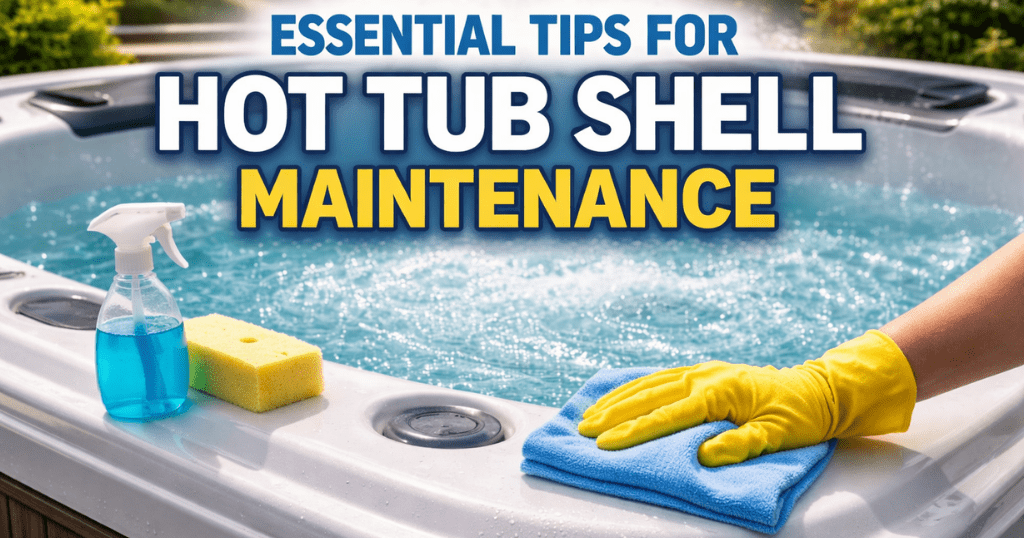

Hot tubs are a luxurious addition to any home, offering relaxation and enjoyment year-round.
However, to ensure your spa remains as inviting as the day you bought it, proper hot tub shell maintenance is essential.
Whether you own a traditional acrylic spa or a modern fiberglass design, understanding the specific care required for your hot tub shell will keep it sparkling clean and enhance its longevity.
This hot tub shell maintenance guide covers everything from understanding your shell material to removing stubborn calcium scale, cleaning a scum line that will not come off, spotting spider cracks, and picking the right products for the job.
Disclosure: As an Amazon Associate I earn from qualifying purchases at no extra cost to you.
Key Takeaways
- Knowing the material of your hot tub shell is crucial for effective maintenance.
- Regular cleaning practices help prevent grime buildup and keep your spa attractive.
- Stains and damage on your hot tub shell can be avoided with proper preventive measures.
- Routine checks for cracks will help maintain the integrity of your hot tub shell.
- Implementing seasonal maintenance ensures your hot tub remains in peak condition year-round.
Understanding Your Hot Tub Shell Material
Before reaching for any cleaner or repair product, it’s worth knowing what your shell is actually made from. The right approach for one material can cause damage on another.
- Acrylic is the most common shell type on mid-range to premium spas. It has a smooth, glossy finish that responds well to pH-balanced spa cleaners, but scratches easily with abrasive tools and is prone to surface microcrazing over time. Most acrylic shells sit over an ABS plastic or fiberglass backing layer for structural support.
- Fiberglass shells are more flexible and a little more forgiving with temperature stress. The outer gel coat can oxidize and lose its sheen over the years, so polishing tends to be a more regular part of fiberglass spa shell care than it is with acrylic.
- Rotomolded polymer is common on inflatable and entry-level models. It’s more tolerant of general cleaning products, but heavily stained or faded polymer shells are harder to restore than acrylic or fiberglass.
If you’re ever unsure, check your owner’s manual before trying a new product, especially if your spa is still under warranty.
How to Clean a Hot Tub Shell (And How Often to Do It)
Consistent, light maintenance is almost always easier than letting buildup accumulate and then trying to tackle it all at once. Here’s a practical schedule that works for most owners.
- After each use, wipe down the waterline with a damp microfiber cloth. It takes two minutes and prevents the scum ring from building up in the first place.
- Weekly, check and adjust your water chemistry. Catching pH and alkalinity drift early is one of the best things you can do for your shell long-term, since imbalanced water is the root cause of most scale and staining problems.
- Monthly, spray the shell with a dedicated spa surface cleaner and wipe it down, paying attention to the areas around jets, seat edges, and corners where mineral residue usually accumulate.
- Every three to four months, drain the tub completely, run a biofilm purge before draining, scrub the shell thoroughly, inspect it carefully for cracks or damage, then refill and re-balance your water.
- Every six months, apply a protective polish or wax product to the clean, dry shell.
What’s Safe to Use on a Hot Tub Shell
This is one of the most debated topics among spa owners, and the mixed advice out there can make it hard to know what to trust.
- Dedicated spa surface cleaners are always the safest choice. Products like Leisure Time Spa Surface Cleaner are pH-balanced, formulated for acrylic and fiberglass, and won’t risk dulling the finish over repeated use.
- White vinegar works reasonably well for light calcium deposits and waterline residue. It’s safe on acrylic, won’t void any warranty, and is cheap. Its limitation is that it doesn’t have the strength for heavy buildup without a lot of scrubbing.
- Magic Eraser is a melamine foam abrasive that many owners use for spot cleaning with good results. That said, used frequently and with heavy pressure, it can gradually dull the gloss on acrylic over time. It’s a useful last resort for stubborn spots, but not the right tool for routine cleaning.
- General bathroom cleaners, CLR, and Bar Keepers Friend are not formulated for spa shells. Some people use them without immediate visible damage, but repeated use carries a real risk of degrading the acrylic finish. A spa-specific product is a better call whenever one is available.
- Green scrubbing pads are generally too abrasive for acrylic shells, even the ones marketed as soft. Microfiber cloths and soft foam sponges are much safer.
Tackling a Stubborn Scum Line
The brown or grey ring that forms at the waterline is typically a mix of body oils, lotions, sunscreen residue, and biofilm. It can be remarkably persistent once it’s set in, even after trying multiple products.
The most effective approach is a biofilm purge before your drain cycle.
Ahh-Some Hot Tub Gel Purge is one of the most widely recommended options for this. You run it through the jets before draining, and it loosens the organic buildup that clings to both the plumbing and the shell surface. One important step: wipe the shell down as soon as you drain, before anything has a chance to dry. Dried biofilm residue is significantly harder to remove than fresh.
Spa Marvel Cleanser is another well-regarded option for quarterly purges, and Leisure Time Spa Surface Cleaner works well as a follow-up spray for wiping the shell down after draining.
Asking everyone to rinse off before getting in, even quickly, cuts down substantially on what ends up accumulating along the waterline.
Why Your Hot Tub Shell Feels Like Sandpaper (Calcium Scale Explained)
If the shell interior feels rough or gritty, or you’re seeing white flaky deposits along the waterline or on the shell floor, calcium scale is almost certainly the cause. This is particularly common for owners on hard municipal water or those running a salt chlorinator system.
What’s happening is that dissolved calcium precipitates out of the water when pH, total alkalinity, or calcium hardness drifts out of range. Your water can look perfectly clear and test within acceptable limits on most parameters and you’ll still get calcium depositing on the shell if the balance isn’t right. The shell doesn’t cause the problem. The water chemistry does.
How to Remove Calcium Scale from Hot Tubs
Start by draining the tub first. Trying to tackle heavy calcium buildup with water still in the tub isn’t very effective.
Once drained, apply a dedicated spa scale remover and let it dwell for a few minutes before wiping. Avoid products designed for bathroom tile or kitchen limescale. These tend to contain strong acids that aren’t suitable for acrylic or fiberglass and can cause permanent dulling.
Natural Chemistry Spa Scale Free is a popular option that binds to calcium deposits and makes them easier to wipe away without aggressive scrubbing. It can also be added to your water as an ongoing preventive treatment.
After refilling, aim for a pH of 7.4 to 7.6, total alkalinity of 80 to 120 ppm, and calcium hardness of 150 to 250 ppm. In hard-water areas, adding a scale inhibitor like BioGuard Scale Inhibitor to your water chemistry routine every few weeks can make a meaningful difference in how often you’re dealing with this problem.
Spider Cracks and Microcrazing on Hot Tub Shells
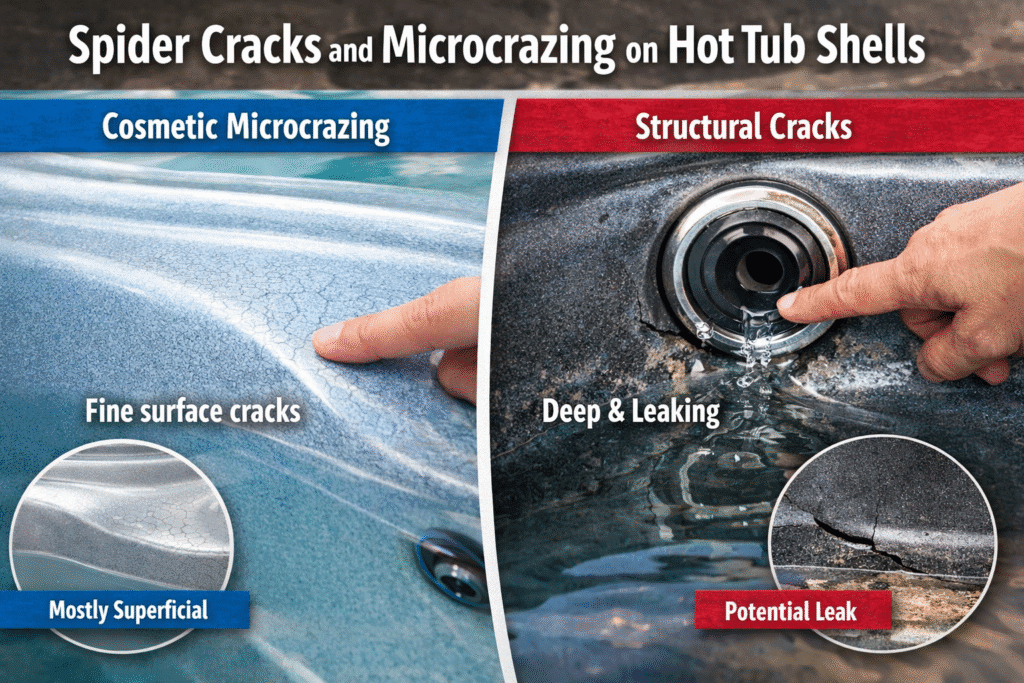
Finding any kind of crack in a hot tub shell is alarming, but what you’re actually looking at matters a great deal. The two most common situations are quite different from each other.
Microcrazing looks like a fine spiderweb of tiny surface cracks, most often near shell edges, steps, or seat areas where stress concentrates. This is extremely common on acrylic shells and is almost always cosmetic. It affects how the shell looks but doesn’t compromise its structural integrity or waterproofing.
The frustrating reality is that most hot tub shell warranties classify microcrazing as cosmetic and exclude it from coverage, even on relatively new spas. If you spot it early on a newer tub, document it thoroughly with photos and contact your dealer. Some manufacturers will repair or replace depending on the circumstances.
Structural cracks are different. These are usually wider, deeper, and often appear near fittings, jets, or the shell floor. If you’re noticing unexplained water loss, soft spots in the shell surface, or a crack that seems to go through the full shell thickness, that warrants closer attention and possibly a professional assessment.
Running your finger across the crack can give you a useful first indication. Microcrazing is likely to feel surface-level, with the shell feeling solid underneath. A structural crack often has some flex or movement around it, and you may notice moisture or staining in the area even when the tub is empty.
What Causes Hot Tub Spider Cracks
Spider cracks can develop for several reasons, including prolonged UV and heat exposure, concentrated chemical contact, physical impact, structural stress, and, in some cases, manufacturing defects.
One of the biggest chemical risks is a floating chlorinator or brominator resting against the shell. Floating dispensers can become trapped in one area, causing over-sanitization, chemical burns, discoloration, surface blistering, and other shell damage, and aren’t usually covered under warranty.
DIY Hot Tub Shell Crack Repair
For cosmetic microcrazing, a gloss restorer can minimize the appearance, and professional resurfacing is an option if it’s widespread. For small structural cracks or chips, a DIY repair can do the job if the damage is limited and you’re comfortable working with adhesives.
Plast-Aid Multi-Purpose Repair Compound is the most widely recommended DIY option for acrylic shell repairs. It bonds chemically to acrylic rather than just sitting on top of it, and it can be wet-sanded and buffed once cured. The repair won’t be invisible, but it will be solid and waterproof.
3M Marine Adhesive Sealant 5200 works well near fittings or in areas that need a flexible, waterproof bond. It’s a practical option for slowing a slow leak while you plan a more permanent fix.
For cracks that penetrate through to the backing material, a fiberglass patch applied from the equipment bay side may be needed alongside the surface repair.
One honest note is that while DIY crack repair may stop leaks and stabilize damage effectively, it rarely looks factory-fresh. If the repair’s appearance matters a lot to you, or if the crack is in a structurally significant area, getting a professional spa resurfacer to assess it first is a worthwhile step before going the DIY route.
Hot Tub Shell Protectants and Covers Worth the Investment
Polish and Wax Products
Once your shell is clean, a protective coating can make ongoing maintenance noticeably easier.
Leisure Time Fast Gloss is one of the most commonly used options in the spa community. Applied to a clean, dry shell every six months or so, it adds a thin protective layer that makes the surface easier to wipe down and gives aging acrylic a renewed sheen.
It won’t reverse significant fading or fill in microcrazing, but for ongoing protection and easier cleaning, many long-term owners find it worthwhile.
Hot Tub Covers
A well-fitting spa cover is arguably the most important piece of ongoing shell protection you can invest in. UV exposure fades acrylic finishes and oxidizes fiberglass gel coats over time. Debris causes scratching. A waterlogged cover that doesn’t sit flat can place stress on the shell edges and contribute to cracking over time.
Look for a cover with at least a four-inch taper and a marine-grade vinyl exterior. When the foam core starts to waterlog and the cover becomes noticeably heavier than it used to be, it’s time to replace it.
Seasonal Hot Tub Shell Maintenance Checklist
- Spring is a natural time for a full drain, purge, and deep shell clean. Inspect the empty shell carefully, apply a gloss protectant, and thoroughly balance your chemistry after refilling.
- Summer brings heavier use and more sunscreen residue. Wiping the shell down after each use becomes more important, and keeping the cover on when the tub isn’t in use limits UV exposure to the shell surface.
- Fall is a good checkpoint before cold weather sets in. Drain, inspect, and confirm the cover is in good shape. Address any cracks or damage before winter adds temperature stress to the equation.
- Winter calls for careful water chemistry maintenance if you’re running the tub through cold months. If winterizing, drain completely and follow your manufacturer’s guidelines precisely. Draining an acrylic tub in freezing temperatures is not recommended, as the thermal shock to a cold, dry shell can contribute to cracking.
Frequently Asked Questions
What materials are commonly used for hot tub shells?
Hot tub shells are typically made from materials such as acrylic, fiberglass, or rotomolded plastic.
Each material has its own maintenance requirements, so understanding the type your hot tub is made from is crucial for proper care.
How often should I clean my hot tub shell?
You should clean your hot tub shell regularly, ideally every 1 to 3 months, depending on usage.
Routine maintenance includes wiping down the surface and removing any debris to prevent buildup.
What can I do to prevent stains on my hot tub shell?
To prevent stains, always rinse off any lotions, oils, or cosmetics before entering the hot tub, and use a cover when the hot tub is not in use.
Additionally, use appropriate cleaning products that won’t damage your shell material.
How can I check for cracks in my hot tub shell?
Regularly inspect your hot tub shell during cleaning.
Look for visible cracks or areas of discoloration.
If you find any cracks, it’s important to address them quickly, as they can lead to further damage or leaks.
What protective measures can I implement for my hot tub shell?
To protect your hot tub shell, use a high-quality cover when not in use, avoid harsh chemicals that can cause damage, and consider applying a protective wax designed specifically for hot tub surfaces.