
What is the difference between a hot tub and a Jacuzzi? If you’ve been using these words interchangeably, you’re not alone—most people do. But there’s actually a simple distinction that clears up the confusion instantly.
Here’s the short answer: a Jacuzzi is just a brand name, like Kleenex or Band-Aid. A hot tub is the actual product, in this case, a large tub filled with heated, jetted water.
Think of it this way: all Jacuzzis are hot tubs, but not all hot tubs are Jacuzzis. Once you understand this, shopping for a spa becomes a lot less confusing.
What is a Hot Tub?
A hot tub is a heated outdoor spa designed for soaking and hydrotherapy. It usually has jets that circulate warm water for massage, plus a pump, heater, filter, and controls to keep the water clean and at temperature.
You will see hot tubs in many sizes and layouts, from small two person models to larger family spas with multiple seats and jet zones.
What is a Jacuzzi?
Jacuzzi is a specific hot tub and spa brand. The brand became so well known that many people started using Jacuzzi as a catch all term for any backyard spa, even when the spa is made by a different manufacturer.
So when someone says they are getting in the Jacuzzi, they usually mean they are getting in a hot tub, not necessarily a Jacuzzi brand model.
Why People Call a Hot Tub a Jacuzzi
This mix-up happened because Jacuzzi dominated the market early on. The Jacuzzi brothers invented the first hydrotherapy pump in 1956, and by the 1970s, their portable spas were everywhere. When a brand becomes that popular, its name often replaces the generic term in everyday language.
You’ve probably done this with other products without thinking twice. You might ask for a Coke when you want any soda, or grab a Kleenex when you need a tissue. The same thing happened with Jacuzzi—people started calling every hot tub by that brand name, even when talking about competitors’ products.
What Makes a Jacuzzi Brand Hot Tub Different
If you’re specifically looking at Jacuzzi-brand products, they do have some distinguishing features.
Jacuzzi spas typically include their patented PowerPro jet system, which creates a specific water flow pattern. They also offer a wide range of models from budget-friendly to luxury, with various seating configurations and jet placements.
That said, other manufacturers have developed their own jet technologies that work just as well (and sometimes better), depending on what you need.
Brands like Sundance, Caldera, and Bullfrog each have unique features that might suit your preferences more than a Jacuzzi would. Don’t limit yourself to one brand just because the name is familiar.
Other Types of Hot Tubs You Should Know About
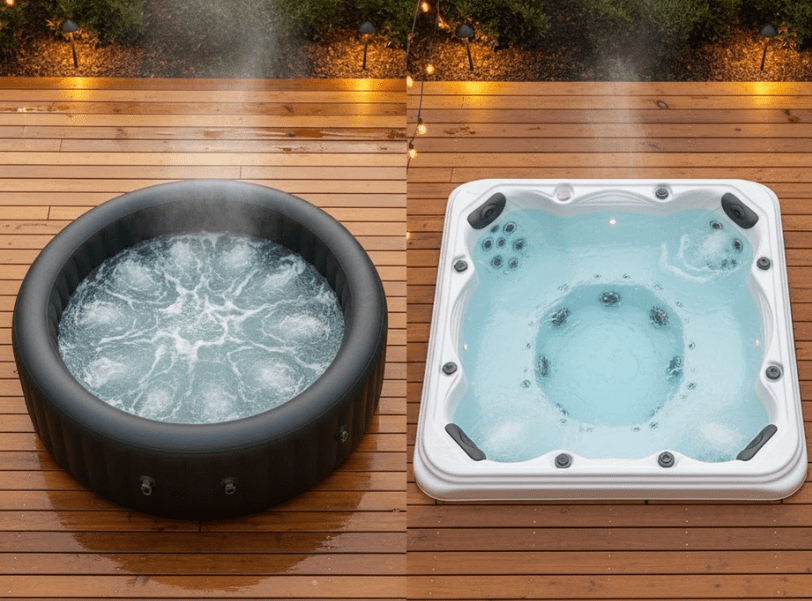
Beyond the Jacuzzi brand confusion, there are actually several different types of hot tubs worth understanding. Portable spas are the most common—these are the acrylic shells you see in backyards, sitting above ground on a pad. They’re pre-built and delivered ready to fill.
In-ground spas are built into your deck or patio, similar to a swimming pool. Swim spas are longer tubs that create a current for swimming in place, combining exercise with relaxation. Then there are inflatable hot tubs, which are budget-friendly but less durable. Each type serves different needs and budgets.
What to Actually Look for When Shopping
When you’re ready to buy, forget about brand names for a minute and focus on what’s important for your situation. First, figure out how many people will regularly use it. That determines the size you need. Then consider jet placement and power, because that’s what creates the massage experience you’re after.
Energy efficiency is huge since you’ll be heating water year-round in most climates. Look for good insulation, a quality cover, and efficient pumps.
Warranty coverage tells you a lot about quality with better manufacturers offering longer warranties on shells and equipment. And don’t skip the wet test if dealers offer it; sitting in the actual spa before buying is worth the trip.
The Real Cost Difference: Brand vs Generic
Here’s what most people don’t realize: you’re often paying extra for the Jacuzzi name. A comparable hot tub from a less-known brand might cost $2,000 to $4,000 less with similar features and build quality. That’s money you could spend on better insulation, upgraded jets, or accessories.
That doesn’t mean Jacuzzi makes bad products—they don’t. But you’re paying partly for decades of marketing and name recognition. If you find a Jacuzzi model you love and it fits your budget, great. Just make sure you’re also looking at Hot Spring, Sundance, Bullfrog, and other quality brands before deciding. You might be surprised what else is out there.
Conclusion
So what is the difference between a hot tub and a Jacuzzi? Now you know it’s just branding—Jacuzzi is one company making hot tubs, not a separate category. This distinction is good to know when you’re shopping because it opens up your options beyond a single manufacturer.
Don’t get hung up on calling it the “right” name in conversation. If you want to say you’re relaxing in the Jacuzzi, nobody’s going to correct you. But when it’s time to actually buy, remember that “hot tub” is the product you’re looking for, and Jacuzzi is just one of many brands to consider.
Take your time comparing features, testing different models if you can, and choosing the spa that fits your space, budget, and needs. Whether you end up with a Jacuzzi or another quality brand, you’ll enjoy the same benefits—relaxation, hydrotherapy, and a backyard retreat you’ll use for years.