
If you’ve been scrolling through Pinterest or Instagram looking at inground hot tub ideas, it’s easy to imagine yourself slipping into perfectly steaming water every night, drink in hand, backyard glowing with accent lighting.
Living with an inground hot tub, though, is a different experience to looking at the photos.
The upfront cost, the way it changes your yard layout, how often you actually use it, and the maintenance routine all hit harder in real life than they do on a mood board.
In this guide, I’ll walk through what inground hot tubs are really like to own, backyard designs, and the trade-offs to think through before you pour any concrete.
What You Need to Know About Inground Hot Tubs
When it comes to inground hot tubs, there’s a consistent pattern: the gap between what people imagine and what they actually get is pretty significant. You’re probably picturing yourself soaking under the stars every evening. In reality, most people use their hot tub 30-50 days a year—not the daily ritual they envisioned when they signed the contract.
That doesn’t mean a built-in spa is a bad idea. You just need to go in with realistic expectations about costs, maintenance, and whether you’ll actually use it enough to justify dropping $5,000-$35,000.
Unlike portable spas that sit on your deck, an inground hot tub becomes part of your landscape. It’s permanent, it looks polished when done right, and yes—it adds real value to your property.
But it also comes with trade-offs that most design inspiration posts conveniently leave out.
Modern Inground Hot Tub Design Ideas
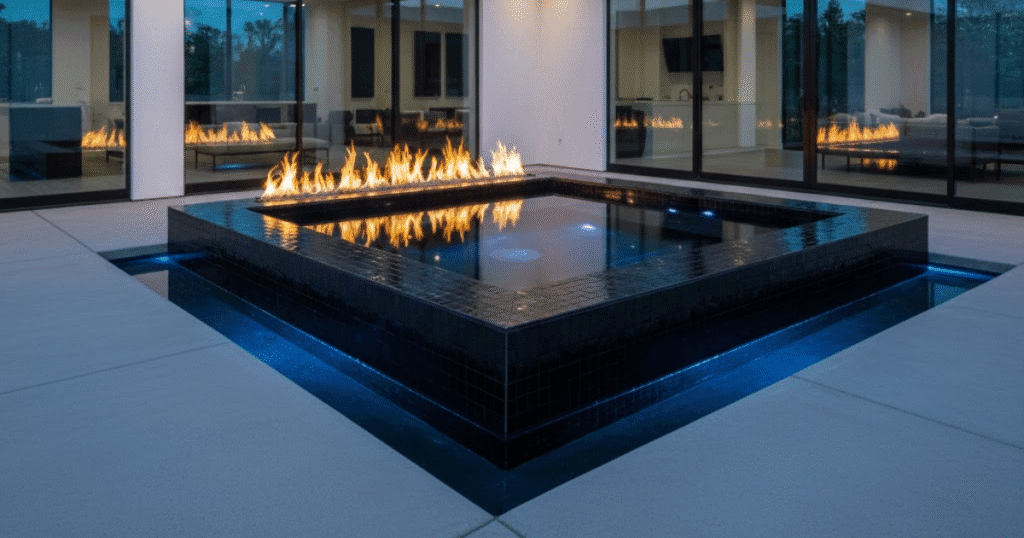
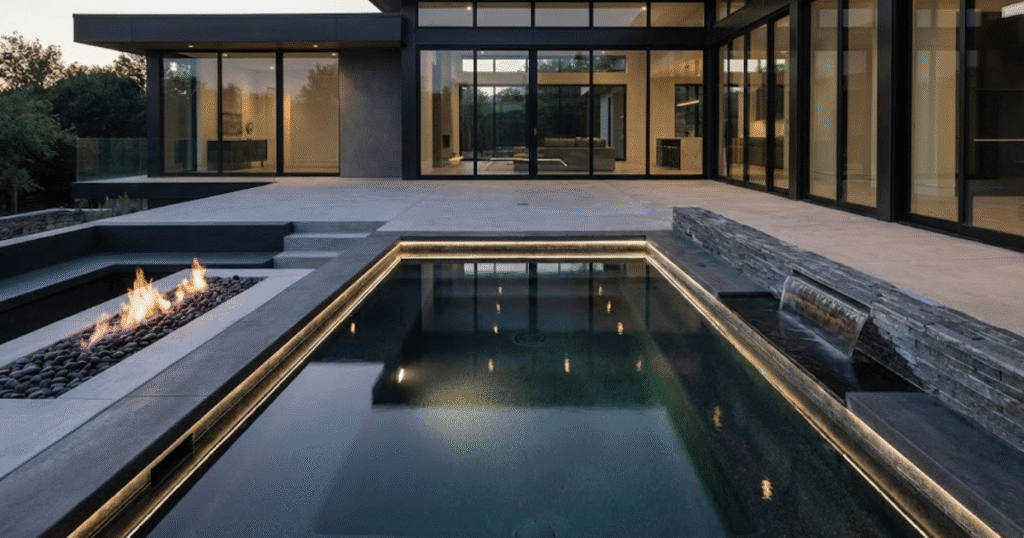
If your home has contemporary architecture, a modern built-in spa can be genuinely impressive. We’re talking geometric shapes, clean tile work, and lighting that creates drama after dark.
Square and rectangular layouts with infinity edges create that high-end resort feel. Monochromatic finishes—think dark plaster or black tile—make the water look deeper and more inviting.
What works in modern designs:
- Flush deck integration where the spa sits perfectly level with your patio
- LED lighting systems (underwater, perimeter, color-changing options)
- Sharp geometric shapes that complement contemporary homes
- Infinity edges that add movement and visual flow
- Fire features or water walls nearby for extra impact
These designs look amazing, but they’re also the most expensive to execute well.
Budget $25,000-$45,000+ for a seamless modern installation. You’ll need a contractor who actually knows what they’re doing—and those aren’t always easy to find. Get at least three quotes and don’t be shocked when they vary by 200% for the exact same work. That price variation is incredibly common in this market.
Natural Stone and Rustic Inground Spa Ideas
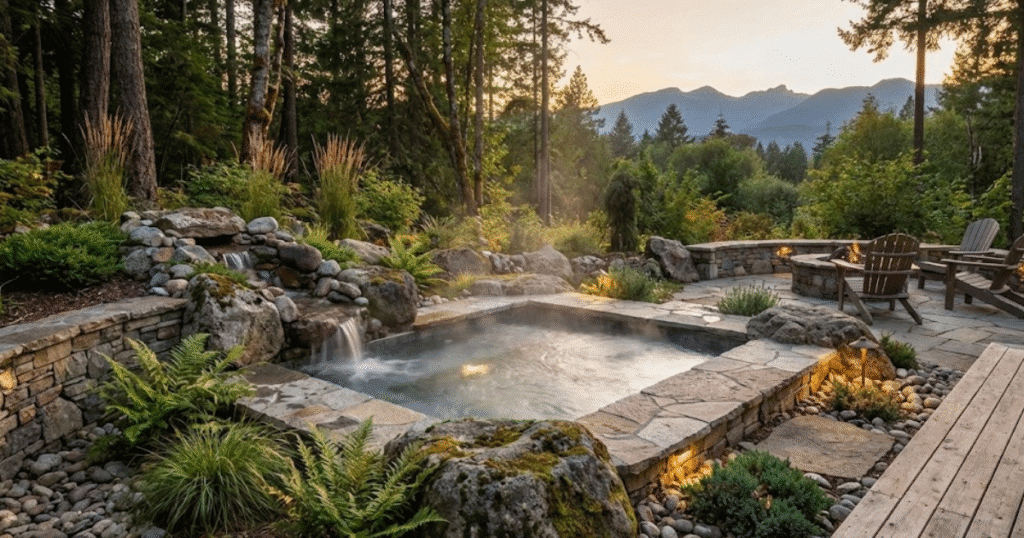
Want that mountain resort vibe? Natural materials are your answer. Stone coping, rock waterfalls, and surrounding boulders make your spa look like it’s always belonged there.
Flagstone, travertine, or slate around the edges ages gracefully and feels timeless. Rock waterfalls aren’t just decorative—they also add privacy and create soothing background noise.
Natural design elements worth considering:
- Native plants that soften hard edges and blend everything together
- Wood deck combined with stone for a rustic-modern hybrid
- River rock around the perimeter for texture
- Natural stone veneer on spa walls
- Strategic boulder placement for natural seating areas
One thing to watch: you still need proper structural support underneath all that beautiful stonework. I came across one homeowner who spent $8,000 on landscaping around their spa, only to discover the contractor hadn’t properly calculated the weight load. Don’t let aesthetics override engineering.
Space-Saving Inground Hot Tub Ideas for Small Yards
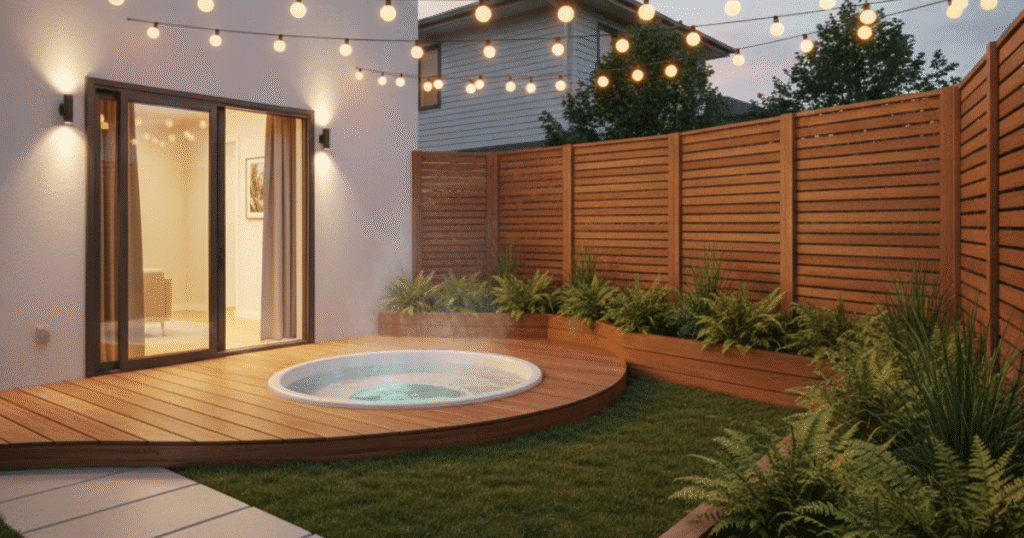
Small yard? You’ve still got options. Corner installations maximize space, and round designs actually take up less room than you’d think.
Here’s something important from owner experiences: if your hot tub is more than 15 feet from your back door, usage drops dramatically. People think they’ll make the trek across the yard in winter—they won’t. Keep it close to the house.
Smart small-space solutions:
- Corner positioning that frees up the rest of your yard
- Round or oval shapes that feel more spacious and allow better conversation flow
- Raised inground hybrids (partially sunken) that work on sloped lots
- Multi-level decks that incorporate the spa without dominating
- Vertical privacy solutions like tall planters or slatted screens
- Narrow rectangular spas along fence lines
Some DIY builders may choose to keep total costs under $10,000 by handling excavation and basic framing themselves, then hiring out only the electrical and plumbing. If you’re handy, this approach works—just make sure you understand permit requirements in your area.
Inground Hot Tub and Pool Combinations
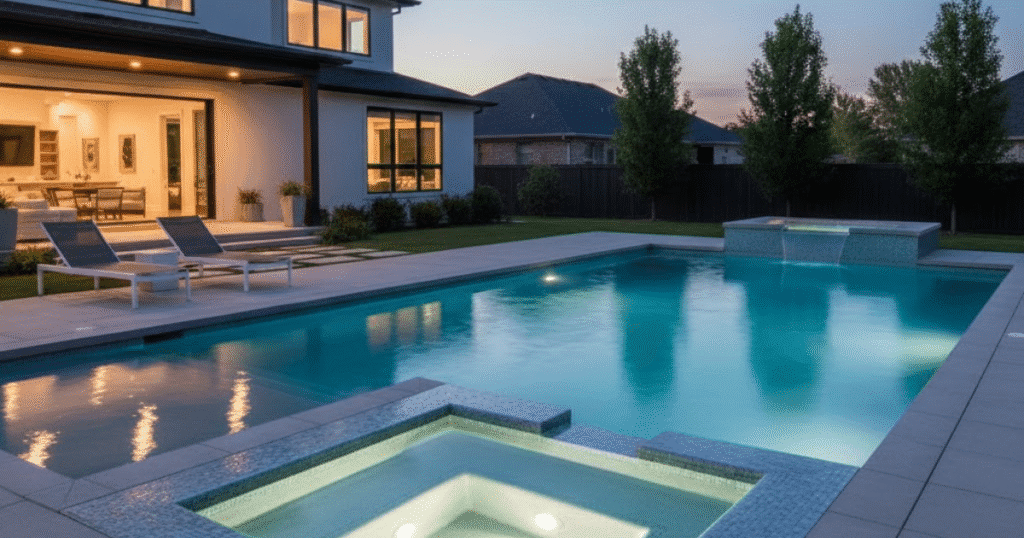
This is where you need to think carefully. Combining your pool and spa looks cohesive and can save money on installation. But functionally? Separate systems almost always work better.
Here’s why: In an integrated spa, the system often shares plumbing and filtration with the pool, but many modern designs allow isolation via valves or “spa mode” to heat the spa independently to 104°F without fully warming the entire pool.
However, in cold climates, freeze protection for the shared plumbing may require running the pool pump 4-12 hours daily during winter, which can add $50-$300 monthly in electricity depending on location, insulation, and energy rates.
The integrated approach offers:
- Classic spillover design where water cascades from spa to pool
- Shared plumbing and filtration systems (in some instances)
- Matching finishes for a unified look
- Lower installation costs (typically $15,000-$30,000 vs. buying both separately)
What actually happens in practice: Most people who go integrated wish they’d done separate. A portable spa gives you 50-70 massage jets versus the 4-10 jets you’ll get in an inground spa. It heats faster, maintains temperature better, and you can use it without running the entire pool system.
If aesthetics matter more than function—go integrated. If you want therapeutic massage and year-round use without astronomical heating bills—go separate.
Deck and Patio Ideas for Built-In Hot Tubs
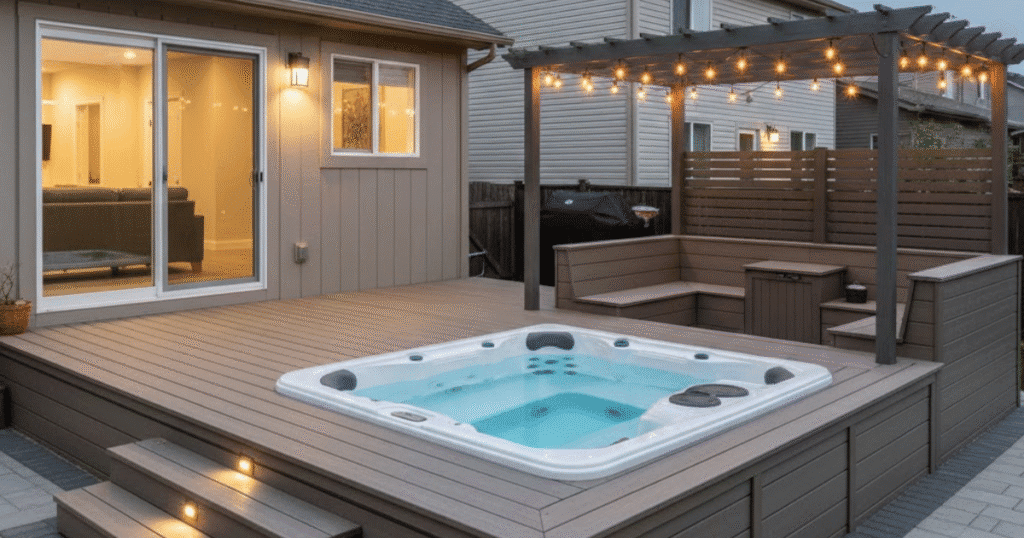
How you surround your spa matters as much as the spa itself. The path from your back door to the tub should feel natural, not like navigating an obstacle course in the dark.
Material choices: Composite decking resists moisture and needs less maintenance. Natural cedar or redwood provides classic beauty and natural slip resistance when wet. Both work—it’s about your priorities and budget.
Integration ideas that actually enhance the experience:
- Sunken seating areas adjacent to the spa for pre-soak lounging
- Built-in benches and storage for towels within arm’s reach
- Paver patterns that define the spa zone visually
- Pergola or gazebo coverage for year-round use
- Safe, well-lit step designs for entry and exit
Budget $3,000-$10,000 for quality hardscaping and deck integration. Yes, it’s extra. But a hot tub sitting on bare concrete or grass looks exactly like what it is—an unfinished project.
Budget-Friendly Inground Hot Tub Ideas
Let’s talk money. Going inground doesn’t automatically mean six-figure spending, but you need to be realistic about total costs.
Pre-fabricated acrylic shells cost 40-60% less than custom gunite builds. You’re looking at $5,000-$15,000 total installed (including electrical and basic surround) versus $25,000-$45,000 for fully custom concrete construction.
Ways to cut costs without cutting corners:
- Do your own excavation if you have the equipment or can rent it
- Phase the project—install the spa first, add landscaping later
- Simple shapes (circles, rectangles) require less custom work
- Energy-efficient equipment lowers long-term operating costs by 30%+
- Get three contractor quotes minimum (they vary wildly)
A word of caution on DIY: You can handle excavation, basic framing, and simple surrounds if you’re handy. But hire licensed professionals for electrical work and structural engineering. I found one forum member who saved $2,000 doing their own electrical, then paid $4,000 to fix code violations when they sold the house. Not worth it.
Maintenance Requirements for Inground Spas
Water chemistry is genuinely complicated. Expect a 6-month learning curve where you’ll battle foamy water, cloudiness, and chemical imbalances. It’s frustrating enough that some people sell their spa within two years.
Time commitment:
- Weekly: 1-2 hours for filter cleaning, water testing, chemical balancing
- Quarterly: Drain and refill (15 minutes with a pump, 2+ hours by gravity)
- Professional service alternative: $40-$180 monthly depending on your area
Ongoing costs:
- Electricity: $30-$100+ monthly (much higher in cold climates or with constant heating)
- Chemicals: $30-$50 monthly
- Professional service: $480-$2,160 annually if you outsource it
One Airbnb host in Southern California reported $135 weekly for maintenance service—that’s over $7,000 annually. Another homeowner in a cold climate keeps their integrated spa running year-round to prevent freeze damage, adding $200-$400 monthly to the electric bill.
This isn’t meant to scare you off. It’s meant to help you budget accurately and decide whether you want to deal with maintenance yourself or hire it out.
Climate Considerations for Your Inground Hot Tub
Where you live affects whether you’ll actually use your hot tub.
- Cold climates (Midwest, Northeast, Canada): Winter usage typically accounts for 80% of annual use. Soaking when it’s snowing outside is genuinely amazing. But keeping water heated in freezing weather costs real money, and integrated spa systems force you to run your pool equipment continuously.
- Hot climates (Arizona, Southern California, Florida): By August, your water temperature can hit 95°F+ without any heating. The spa becomes completely unusable during summer months when even your pool isn’t appealing. You’ll get your use in spring, fall, and winter—but forget about June through September.
- Moderate climates: You’ve got the best of both worlds with extended shoulder seasons making year-round use actually practical.
Think about your specific climate before you commit. If you’re in Phoenix dreaming about summer hot tub parties, I have bad news for you.
Common Mistakes With Inground Hot Tub Installation
From owner experiences and contractor horror stories, these regrets come up repeatedly:
- Distance from the house: Anything over 15 feet dramatically reduces usage. The novelty of walking across your yard in a bathrobe wears off fast.
- Going cheap on contractors: Price quotes ranging from $8,000 to $25,000 for identical work means somebody’s cutting corners. Check licenses, get references, demand structural calculations in writing.
- Ignoring access for repairs: Built-in seating and structural elements look great until you need to access equipment for repairs. Service techs universally hate built-in tubs because equipment access is terrible.
- Underestimating maintenance: If you’re not prepared to test water chemistry weekly and rebalance chemicals, budget for professional service from day one.
- Overestimating usage: Be honest about whether you’ll actually use it. If you’re thinking “seems nice to have,” that’s not enough justification for a $20,000+ investment.
FAQ
How much does an inground hot tub really cost?
All-in costs typically run $15,000-$45,000 including electrical hookup ($800-$4,200), concrete foundation ($500-$3,000), the tub itself, and basic surround work. DIYers watching their budget can get it done for $5,000-$15,000+ by handling excavation and framing themselves. Add another $3,000-$10,000 if you want serious landscaping integration.
Should I get an inground spa attached to my pool or keep them separate?
Separate systems function better—you get more jets, independent temperature control, and don’t need to heat the entire pool in winter. Integrated spas look more cohesive but force you to share temperature and run pool equipment year-round. Most homeowners wish they’d gone separate for the flexibility, even if aesthetics take a small hit.
How often will I actually use an inground hot tub?
Be realistic about how often you’d actually use an inground hot tub. Average usage is 30-50 days per year for family households. Initial excitement fades after about a year. People who have specific use cases (weekly wellness ritual, regular entertaining, vacation rental income) use it consistently. People who install it because “it seems nice” often regret it. Location matters too—keep it within 15 feet of your back door or usage drops dramatically.
What’s the monthly cost to run an inground hot tub?
Electricity adds $30-$100+ monthly (much higher in cold climates). Chemicals run $30-$50 monthly. Professional maintenance service costs $40-$180 monthly if you outsource it. One cold-climate homeowner with an integrated spa reported $200-$400 monthly just keeping the pool equipment running to prevent freeze damage.
Can I DIY an inground hot tub installation?
You can handle excavation, basic framing, and simple surrounds if you’re handy. But hire licensed professionals for electrical work (code violations will bite you at resale) and get structural engineering for weight calculations (4,000-6,000 lbs when filled). Many successful DIY installations cost $5,000-$10,000 total by doing prep work and hiring pros only for specialized work.
Do inground hot tubs increase home value?
When it comes to whether hot tubs increases home value, it depends. In resort areas or upscale neighborhoods where outdoor amenities are expected, you’ll likely recoup 30-50% of your investment at resale. In average suburbs, it’s hit or miss. Some buyers see it as a bonus, others see it as a maintenance burden they’ll need to remove. Don’t count on it paying for itself, but it won’t necessarily hurt resale either.
What’s the maintenance learning curve really like?
Expect 6 months of frustration while you figure out water chemistry. Initial disasters with foamy or cloudy water are common. Once you’ve got it dialed in, maintenance is 1-2 hours weekly plus quarterly drain-and-refills. Many people end up hiring professional service ($480-$2,160 annually) because they’d rather pay than deal with constant water chemistry anxiety.