
You know that moment when you’re ready to sink into your spa after a long day, but the water feels off?
That’s usually your pH telling you something’s wrong. Spa pH adjustment isn’t complicated, but it’s probably the most important thing you’ll do to keep your hot tub water comfortable and your equipment running smoothly.
Here’s the thing: water that’s too acidic or too alkaline doesn’t just feel bad on your skin, it can corrode your heater, cloud up your water, and make your sanitizer completely ineffective.
I’m going to walk you through exactly how to adjust and balance your hot tub’s pH so you can start enjoying your spa instead of fighting with it.
Key Takeaways
- Understanding pH is crucial for maintaining safe and comfortable spa water.
- The ideal pH range for spa water is between 7.2 and 7.8 for optimal relaxation.
- Common causes of pH imbalance include sanitizer levels, water source, and organic contaminants.
- Follow a step-by-step guide to adjust pH levels, ensuring a precise balance.
- Regular monitoring and effective troubleshooting are essential to maintain spa pH stability.
Disclosure: As an Amazon Associate I earn on qualifying purchases at no extra cost to you.
Understanding pH and Its Importance in Spa Water
Your spa’s pH level affects literally everything in your hot tub. When the pH drifts out of the ideal 7.2–7.8 range, it can lead to various problems such as skin irritation, equipment corrosion, and compromised sanitizer effectiveness.
Understanding the importance of spa pH adjustment not only enhances the overall spa experience but also prolongs the lifespan of your spa equipment.
Regular testing and appropriate adjustments using chemical products can keep pH levels stable, ensuring clean, clear, and comfortable water for all users.
The Ideal pH Range for Spa Water
The ideal pH range for spa water is 7.2 to 7.8. Keeping your hot tub water in this zone helps your sanitizer do its job, keeps the water clear, and makes soaking feel comfortable on your skin.
A good target is around 7.4, which is close to the natural pH of the body.
When spa water becomes too acidic, it can cause stinging eyes, dry itchy skin, and faster corrosion on parts like the heater and pump components.
When the water is too alkaline, you are more likely to see cloudy water, scale buildup on the shell and jets, and weaker chlorine or bromine performance.
The easiest way to stay on track is regular water testing and small spa pH adjustments as needed.
Check pH alongside total alkalinity since alkalinity helps stabilize pH and prevents big swings. With consistent testing and minor corrections, you can keep your water chemistry balanced and your spa equipment protected.
Step-by-Step Guide to Adjusting Spa pH Levels
Testing is where most people go wrong. You can’t adjust what you don’t measure correctly, and not all testing methods are created equal.
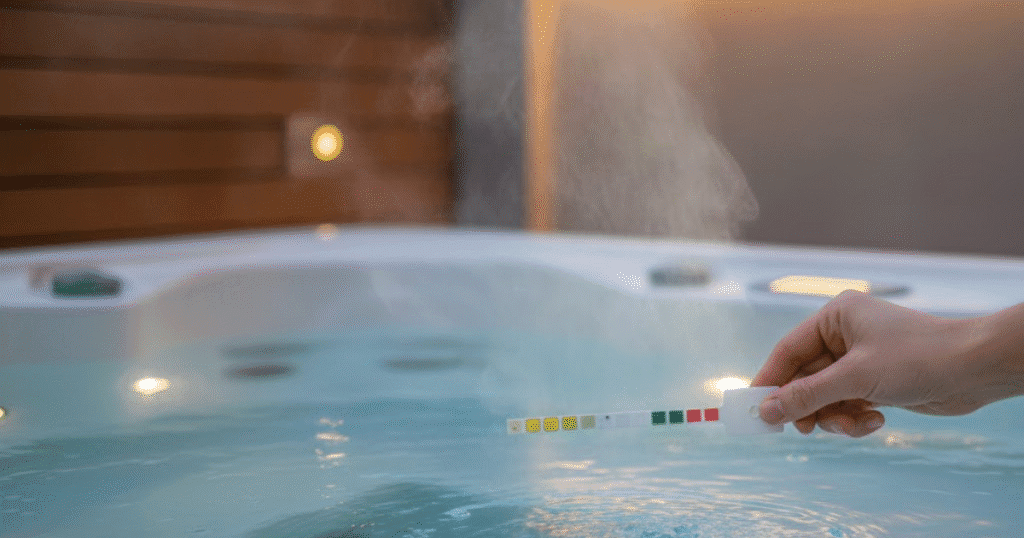
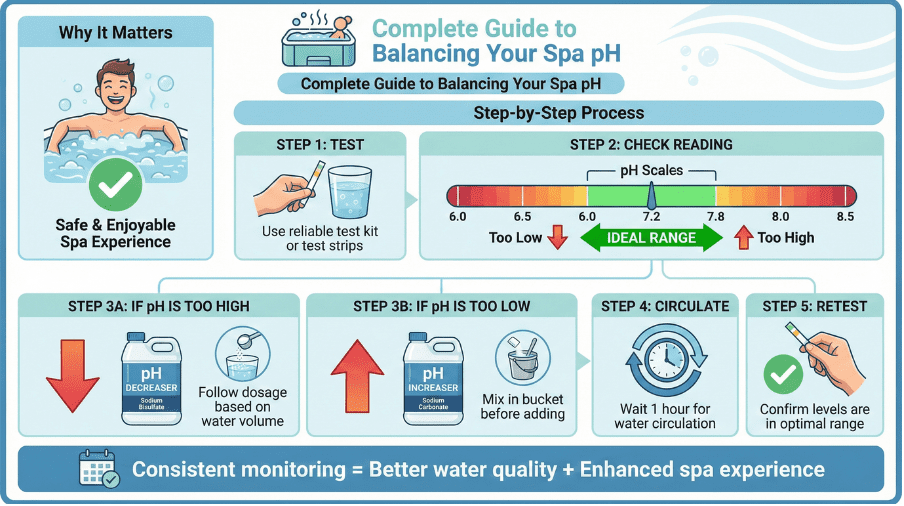
To carry out an effective spa pH adjustment, start by testing the current pH level using a reliable test kit or test strips designed for spas.
Ideal pH levels should range between 7.2 and 7.8; if your readings fall outside this range, adjust accordingly.
To lower the pH, add a pH decreaser product, typically sodium bisulfate, following the manufacturer’s instructions for dosage based on your spa’s water volume.
Conversely, to raise the pH, introduce a pH increaser, usually sodium carbonate, ensuring you mix it well in a bucket of water before adding it to your spa.
Test strips are convenient but less accurate than liquid test kits or digital pH meters. For best results, always take your water sample from elbow depth, away from jets and returns. Never test immediately after adding chemicals—wait at least 20 minutes with circulation running.
Common Causes of pH Imbalance in Spas
Spa pH is one of those “set it and forget it” things that only works when it stays in range. When it drifts, you’ll know it. You may start noticing water that’s harsh on skin and eyes, cloudy water, weak sanitizer performance, or scale starting to show up on the shell and jets.
The most common cause is bather contamination. Body oils, sweat, deodorant, makeup, sunscreen, and hair products all get into the water and change water balance over time. Heavy use, long soaks, and kids in the spa can speed this up fast.
Temperature and aeration play a role too. Hotter water, frequent jet use, and lots of bubbles increase aeration, which often pushes pH upward. Outdoor hot tubs can swing even more with weather changes, topping up with fresh water, or rainwater dilution.
Other factors include insufficient filtration, which fails to remove debris effectively, and the regular addition of chemicals like sanitizers, which can inadvertently alter pH levels.
To mitigate these issues, it’s vital to regularly test the water and perform spa pH adjustment accordingly.
Small, regular adjustments keep your water clear, protect your heater and pump, and help chlorine or bromine work the way it should.
Best Practices for Monitoring and Maintaining Spa pH
Spa pH adjustment is easiest when it becomes part of a simple routine. Test your hot tub pH regularly with a quality test kit or a digital pH meter. Checking before a soak is ideal, and daily testing is recommended, especially if the spa gets heavy use.
If pH is low, use a pH increaser to bring it back into range. If pH is high, use a pH decreaser to lower it.
Additionally, keep an eye on other water quality indicators such as alkalinity and sanitizer levels, as they also play a significant role in pH stability.
Keep filters clean and shock the water when needed, especially after heavy bather load. Good circulation, clean filtration, and regular testing go a long way toward clear water, hygienic soaking, and stable spa water chemistry in every session.
Frequently Asked Questions
What is pH and why is it important for spa water?
pH is a measure of how acidic or alkaline water is, on a scale from 0 to 14.
For spa water, maintaining the correct pH is essential for comfort, safety, and the effectiveness of sanitizers.
An improper pH can lead to scale build-up, irritation of the skin and eyes, and reduced sanitation of the water.
What is the ideal pH range for spa water?
The ideal pH range for spa water is typically between 7.2 and 7.8.
Keeping the pH within this range helps ensure that the water is comfortable for bathers and maximizes the effectiveness of chemicals used for sanitation.
What common causes can lead to pH imbalance in my spa?
Common causes of pH imbalance can include the introduction of chemicals, the use of personal hygiene products, heavy bather load, rain or environmental contaminants, and the use of hard water.
Regular testing and maintenance can help mitigate these issues.
How can I adjust the pH levels in my spa?
To adjust pH levels in your spa, first test the water with a reliable pH testing kit.
If necessary, add a pH increaser (sodium carbonate) if the pH is too low, or a pH decreaser (sodium bisulfate) if it is too high.
Follow the manufacturer’s instructions for the right dosage and allow the water to circulate before retesting.
What are some best practices for monitoring and maintaining spa pH levels?
Best practices for maintaining spa pH include regularly testing water (at least weekly), keeping all spa chemicals on hand for quick adjustments, maintaining proper water balance, and routinely cleaning the spa.
Additionally, keeping the spa covered when not in use can help protect it from environmental factors that can cause pH fluctuations.
What happens if your hot tub pH is too high?
High pH can make your water cloudy, reduce how well chlorine or bromine sanitizes, and cause scale buildup on the shell, heater, and jets. It can also lead to dry, irritated skin and eyes for some bathers.
Will baking soda raise pH in a hot tub?
Baking soda mainly raises total alkalinity, and it can nudge pH up slightly depending on your current water balance. If you need to raise pH more directly, a pH increaser product is usually more predictable.
How long does it take to lower pH in a hot tub?
After adding pH decreaser with circulation running, many hot tubs show a change within 20 to 60 minutes. Retest after at least 20 minutes, then make small follow up adjustments if needed.
What to add if pH is too high?
Add a pH decreaser made for hot tubs, often labeled pH Down and commonly based on sodium bisulfate. Add it in small doses with circulation running, then retest before adding more.
Can I add vinegar to my hot tub to lower pH?
It can lower pH, but it is not recommended because it is hard to dose accurately and can upset water balance, odor, and sanitation. Use a spa grade pH decreaser instead for controlled, repeatable results.